
IMO Awarded Nashville Public Library Courtyard Project
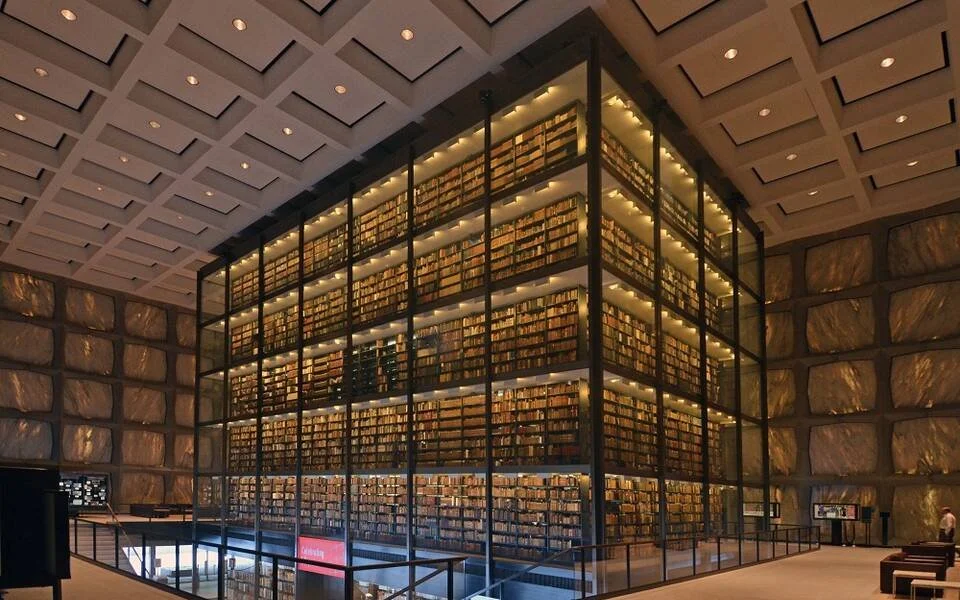
Beinecke Rare Book & Manuscript Library in New Haven, CT by Skidmore, Owings & Merrill
There’s a specific kind of awe that only libraries produce. Not museums. Not galleries. Libraries.
You feel it when you enter a space like the Beinecke Rare Book & Manuscript Library and realize the rows of books are doing more than merely containing knowledge; they’re working with the architecture to create experience.
For decades, libraries were designed primarily as systems of storage and retrieval. Their buildings optimized for preservation, categorization, efficiency, and control. Books were the focal point; people moved around them accordingly. The spatial experience was often secondary to the logistical function of housing information (now, effectively infinite and instantly accessible) at scale.
What physical libraries offer instead is something digital fundamentally cannot. The best contemporary libraries use light, material, acoustics, scale, and circulation to slow people down, invite wandering, encourage reflection, and create unexpected adjacency between individuals, ideas, and experiences. Reading becomes only one layer of a larger civic and emotional experience.
In these spaces, architecture itself becomes pedagogical. A staircase can function as gathering space. A bookshelf can become landscape. A reading room can feel contemplative, cinematic, or socially charged depending on how light and sound are shaped around the body. The building stops acting as passive container and begins actively participating in how knowledge is experienced.
The result is a fundamental shift in what the library represents culturally. No longer just an archive, the contemporary library is increasingly a platform for public life — equal parts sanctuary, forum, workshop, theater, and social commons.
Libraries as Experience
Projects like Vennesla Library blur the line between structure, furniture, circulation, and atmosphere. The ribbed timber system feels less like architecture and more like inhabiting an idea. The space teaches you how to move through it intuitively. The structural ribs sweep continuously from floor to ceiling, becoming bookshelf, wall, seating edge, acoustic buffer, and spatial rhythm simultaneously. That continuity produces an unusually immersive sense of coherence; nothing feels applied afterward or separated into architectural “systems.” The result is both monumental and deeply human-scaled. Movement through the building becomes almost bodily. You follow the cadence of the timber arches instinctively, pulled forward by repetition, compression, and release. Acoustically, the wood softens the vastness of the interior, giving the library an almost cathedral-like calm without becoming austere. It demonstrates how atmosphere can emerge directly from structure itself rather than decoration layered onto it later.
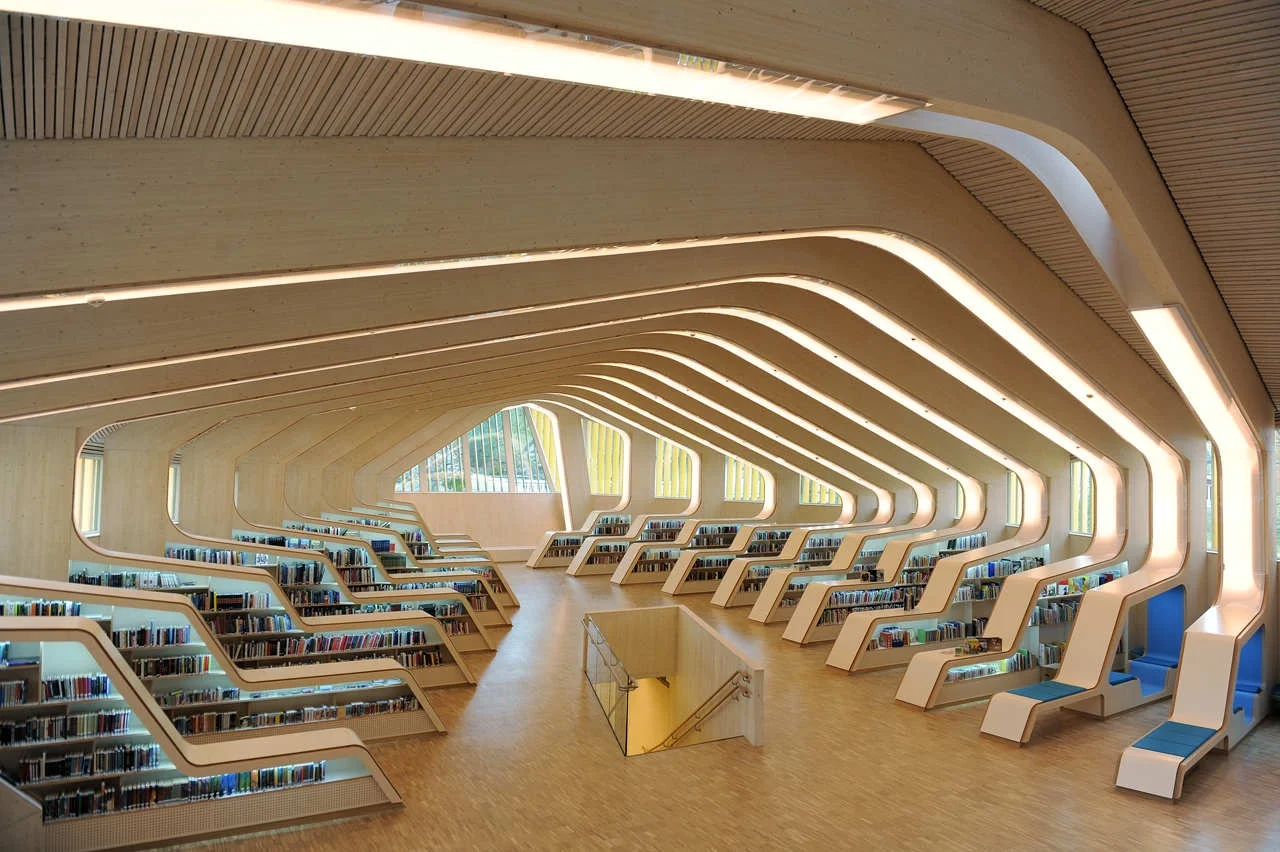
Vennesla Library by Helen & Hard
Meanwhile, Helsinki Central Library Oodi reframes the library as democratic infrastructure. Less institution, more living room for the city. Recording studios sit beside reading rooms. Public gathering overlaps with solitude. Civic identity becomes participatory instead of ceremonial. What makes Oodi particularly compelling is the way it dissolves traditional hierarchies around knowledge and public space. The building doesn’t privilege silence over activity or scholarship over everyday life. Instead, it accepts contemporary civic culture as fluid and pluralistic. Teenagers gaming, families gathering, freelancers working, children playing, and readers quietly occupying corners all coexist within the same architectural ecosystem.
The experience is intentionally porous. Large glazed facades visually connect the city back into the interior, while the upper reading hall diffuses daylight so evenly it almost feels cloud-like. Oodi feels optimistic without becoming performative — a public building designed around access, participation, and cultural ownership rather than authority. The architecture reflects that shift. Transparency. Programmatic ambiguity. The building feels intentionally unfinished in the best way — adaptable to whatever culture needs from it next.
The newly opened Obama Presidential Center further expands the definition of what a library-related civic institution can be. Rather than functioning solely as an archive, the campus is conceived as a platform for public life—combining exhibition space, education, and community programming into a single cultural ecosystem. The project reflects a broader shift in how knowledge institutions are evolving from places of preservation into places of participation.
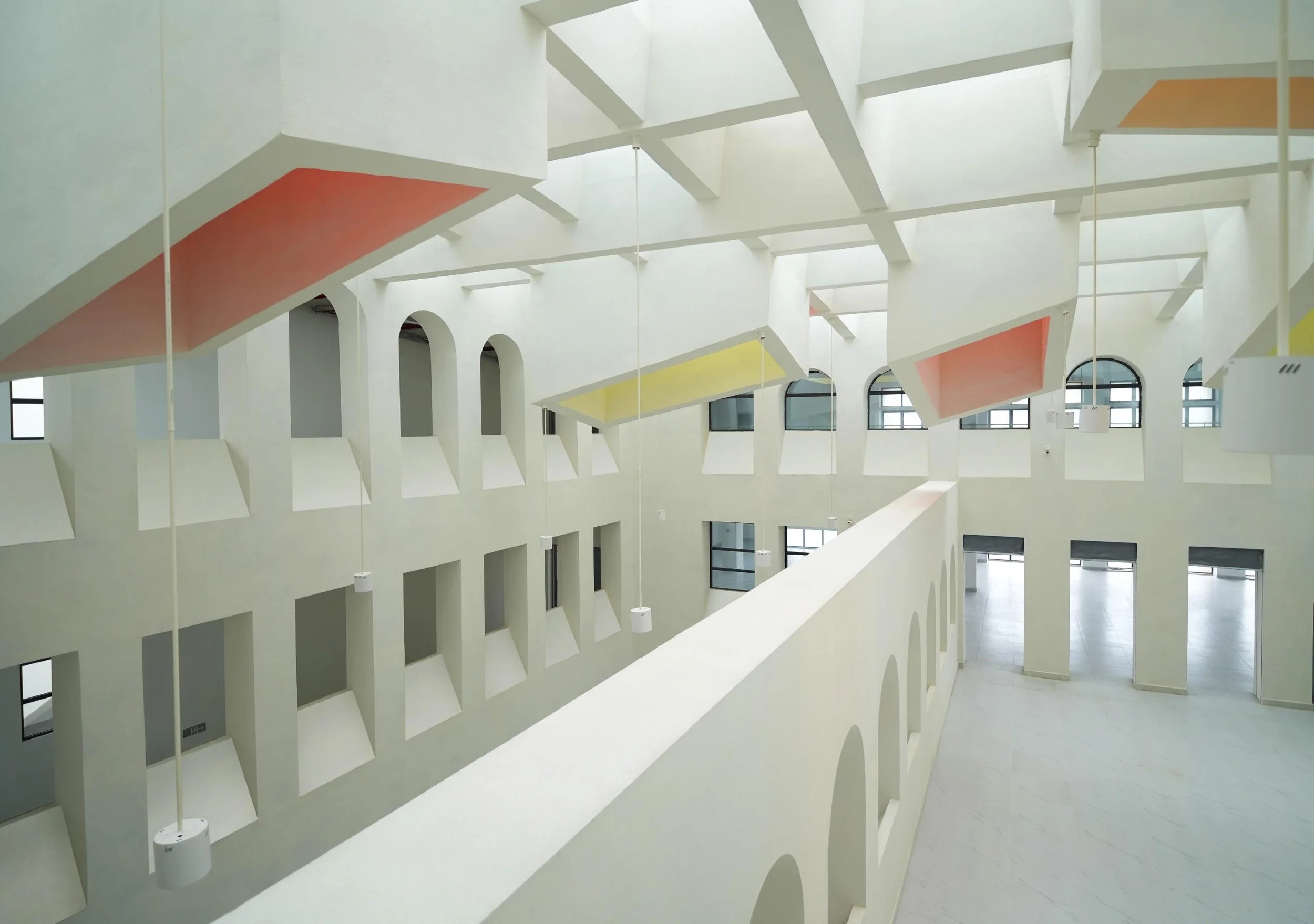
Library & Information Center Technical School by West-Line Studio
Then there are projects like the Library & Information Center, where the library becomes almost cinematic. Hyper-composed. Atmospheric. Spatially immersive. Bookshelves stop behaving like shelving and begin operating as landscape. The project leverages scale, repetition, reflection, and lighting to produce an environment that feels closer to a film set or speculative world than a conventional library interior. Perspective becomes exaggerated. Endless rows of illuminated books create a visual field that feels infinite, almost disorienting in the best way. The architecture leans fully into emotional spectacle while still maintaining intimacy at the level of the individual reader. The result is a library that feels dreamlike, immersive, and deeply memorable — a place where the emotional experience of knowledge becomes inseparable from the spatial experience itself.
Similarly, Tianjin Binhai Library’s continuous terraced bookshelves ripple across walls and ceilings like topography, dissolving the distinction between floor, architecture, furniture, and collection into a single spatial gesture. The scale is intentionally overwhelming. Visitors don’t simply enter the library; they become visually absorbed into it. The vast white interior produces a surreal sense of infinity, while the cascading shelves transform the act of browsing into something theatrical. Stairways double as seating. Reading becomes performance. Circulation becomes spectacle. What makes the project so culturally resonant is not only its formal ambition, but its understanding that libraries now compete for attention within an image-saturated world. The building embraces visual memorability unapologetically, yet still succeeds in creating moments of reflection and wonder at the scale of the individual. It demonstrates how contemporary libraries can function simultaneously as civic landmark, immersive environment, and social condenser.
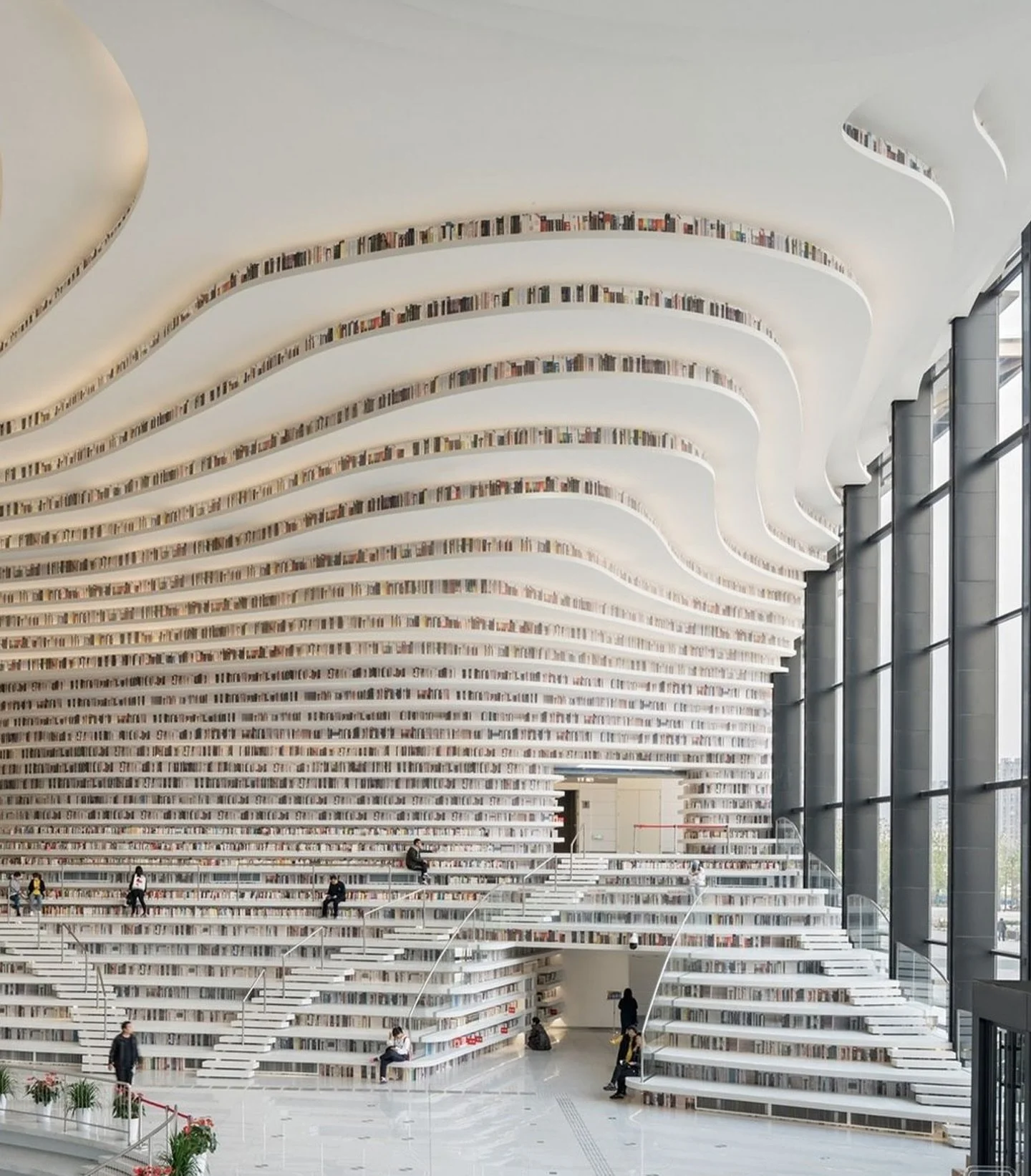
Tianjin Binhai Library by MVRDV + Tianjin Urban Planning and Design Institute
When information became digitally infinite, physical libraries had to evolve beyond access alone. Their value shifted toward experience, encounter, orientation, reflection, and public life. The architecture had to become emotionally legible, not just operationally efficient.
In that sense, libraries are now closer to immersive environments than institutional buildings. They shape attention. That’s what makes them so compelling to us at IMO. Public libraries occupy a rare category of civic space: universally accessible, emotionally resonant, intergenerational, and culturally symbolic all at once. They are among the last truly public interiors left.
Which is partly why we’re excited to share that Immersive Material Office was recently announced as the selected artist for the Nashville’s Public Library courtyard public art project!
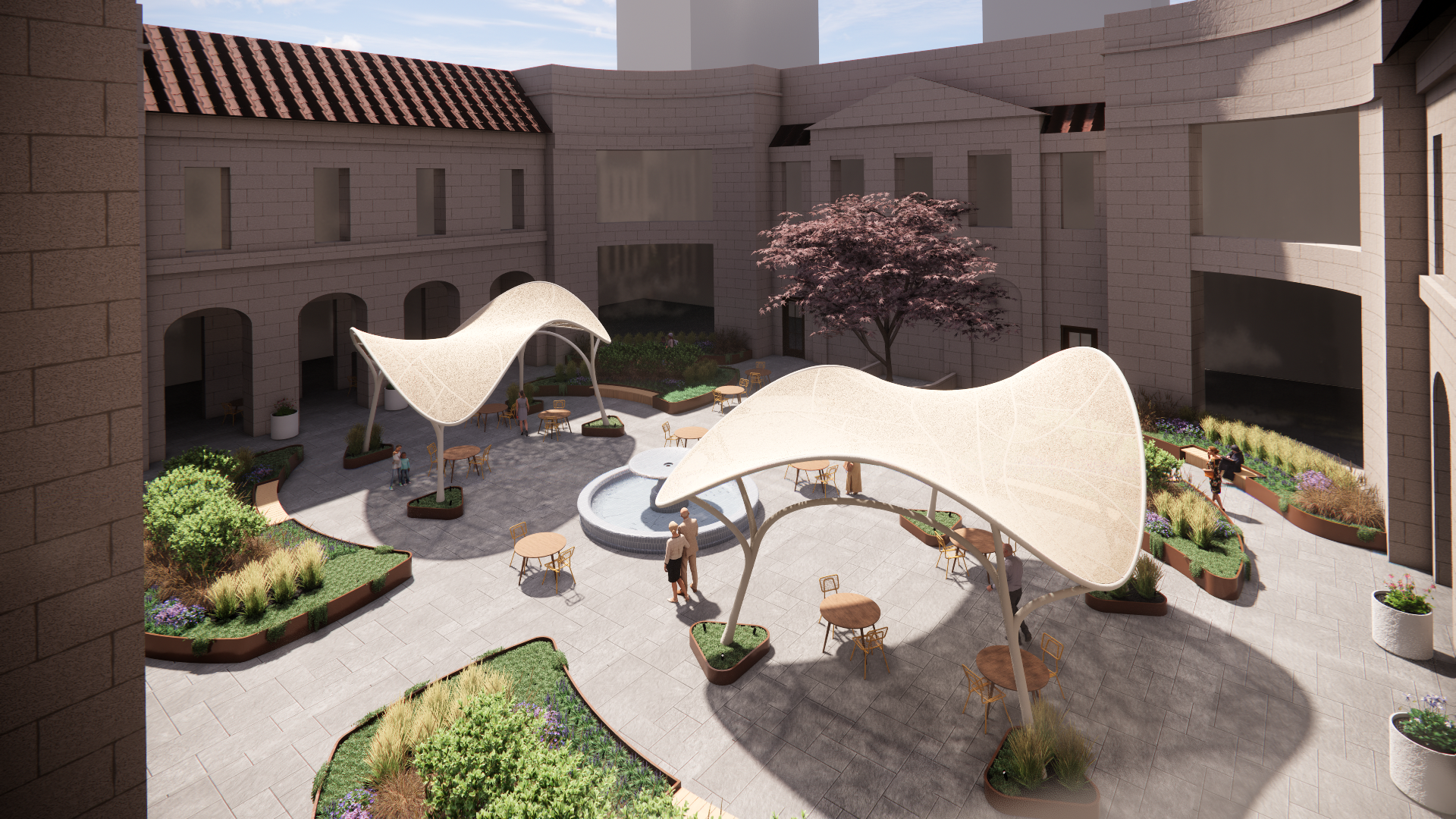
Our proposal, Endless Canopy, transforms the courtyard into what we described as “a luminous field of light and shadow.” The intervention draws from the formal language of branching trees, turning pages, and book spines — using tensile canopy structures to create moments of shade, pause, gathering, and reflection throughout the space.
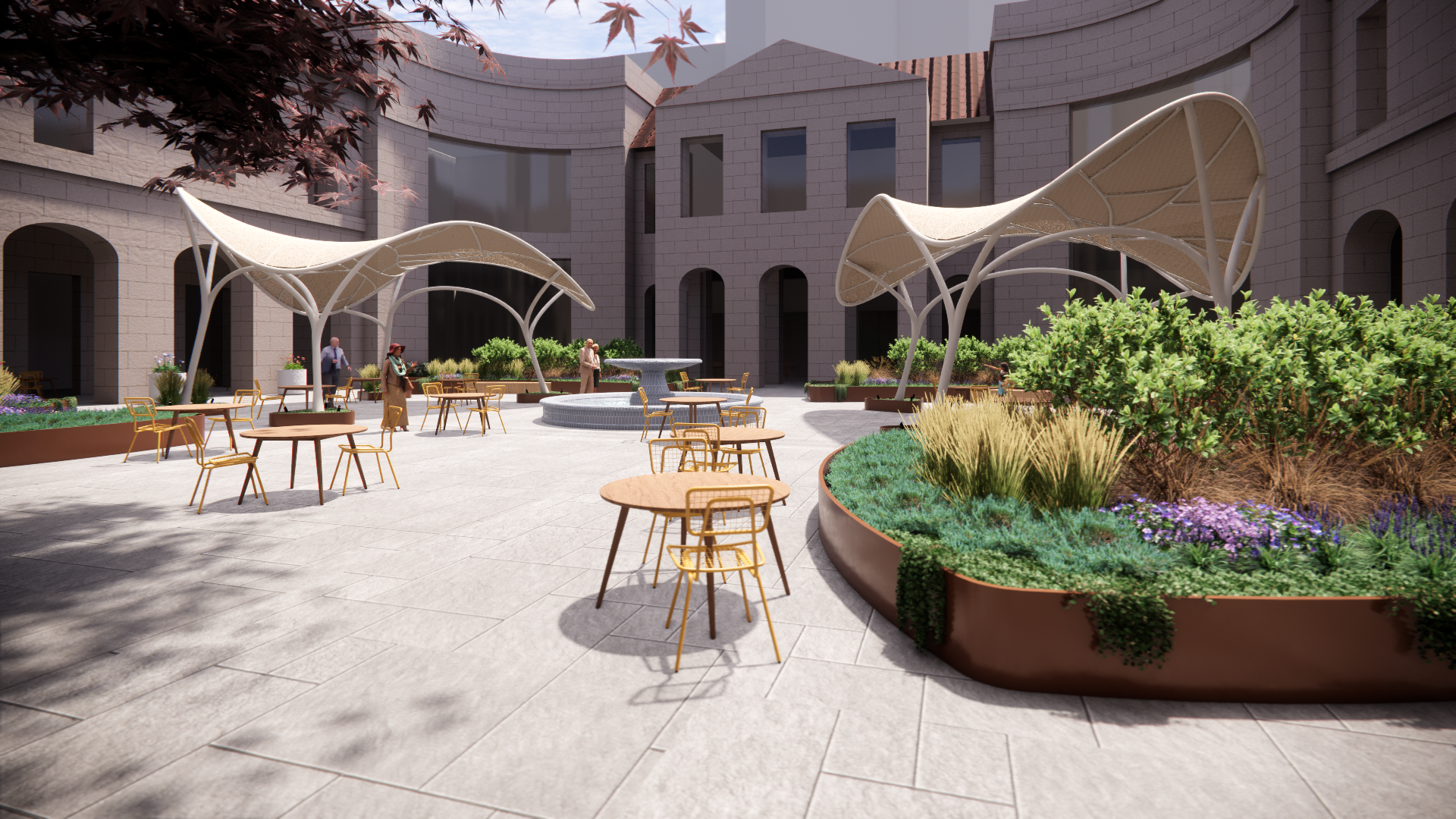
Endless Canopy, est. 2027 by Immersive Material Office
What interested us most wasn’t simply creating an object in the courtyard. It was shaping behavior around it. The proposal intentionally clarifies circulation while creating lingering zones and social pockets throughout the site. Seating orientations encourage conversation. Edge paths slow movement. The courtyard becomes less transitional and more inhabitable. We collaborated with LT Design Studio to create landscaping that accentuates the form of the artwork without overpowering it. Flowing, organic planting patterns radiate outward from the sculpture, using a variety of colors, heights, and textures to capture the eye. The result is a courtyard that feels full yet never crowded, where every move supports endless routes and a layered, immersive experience.
In other words: the library extends beyond the walls of the building itself. That’s increasingly the future of civic cultural space. Not static monuments, but responsive environments. Places that support both solitude and gathering. Places where architecture acts less like backdrop and more like participant. Libraries have always been repositories of stories. Now they’re becoming stories people physically move through.
For more, watch our public presentation at the NPL board meeting earlier this month (May ‘26)