
In the world of high-end integration, we often talk about "The System." We discuss signal paths, redundancy, pixel density, and rack elevation. But as the AV industry evolves, a new challenge has emerged for integrators: The Hardware vs. Experience Delta.
While the integrator builds the system, the system’s value is only realized when it connects with the human being standing in front of it.
To bridge this delta, we use a simple Venn diagram framework to define where the technical ends and the transformative begins.
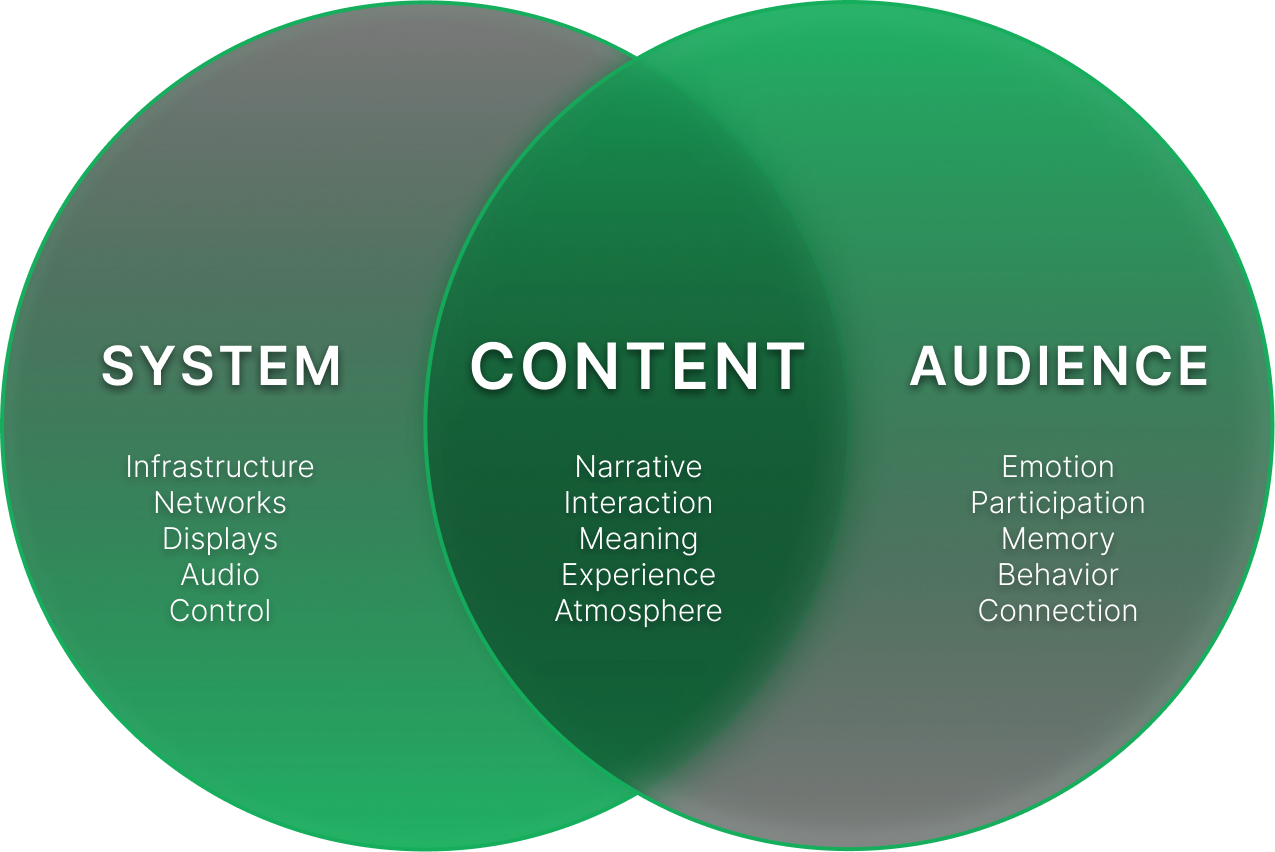
The System, the Audience, and the Delta
If you visualize the success of a project as two distinct circles, the "Delta" is the space between what a system is capable of and what an audience actually experiences.
On one side is the AV system itself: the displays, processors, networks, control systems, and integration expertise required to bring a complex environment to life. This is the domain of the integrator. It is a world defined by technical precision, reliability, and performance. Every component must function seamlessly, often at significant scale and complexity.
On the other side is the audience. Whether they are employees, customers, visitors, stakeholders, or guests, they experience the environment very differently. They are not evaluating signal flow, pixel density, or rack design. They are responding to atmosphere, emotion, participation, memory, and connection. Their perception of success is shaped by what the space feels like, what it communicates, and whether it leaves a lasting impression.
The challenge is that exceptional hardware does not automatically create exceptional experiences. A technically flawless system can still feel static, forgettable, or underutilized if there is no compelling reason for people to engage with it. The most successful projects close that gap by ensuring the technology serves a larger experiential purpose.
This is where immersive content becomes critical. Content functions as the translation layer between infrastructure and audience. It is the mechanism that converts technical capability into human impact. The hardware establishes what is possible, but content determines whether that potential is ever realized.
For integrators, this distinction is increasingly important. Clients are making substantial investments in architectural displays, media environments, interactive installations, and digital experiences. They are rarely evaluating success based on technical specifications alone. Instead, they measure success through engagement, adoption, brand perception, visitor response, and the overall value the installation creates within the space.
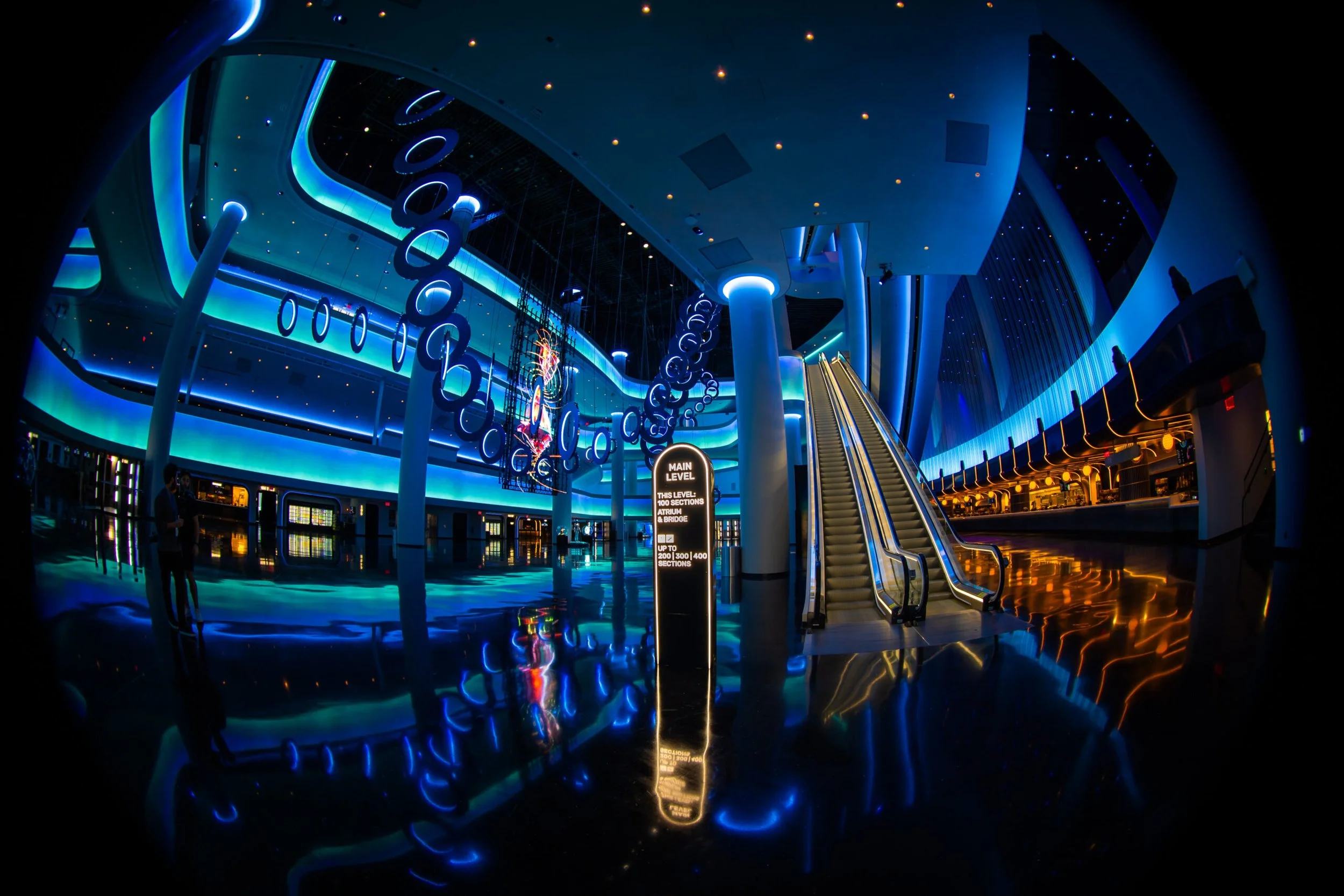
The Las Vegas Sphere lobby experience
When content is treated as an afterthought, even sophisticated systems risk becoming digital wallpaper. When content is developed alongside the AV strategy, the technology becomes something more than a collection of components. It becomes an experience with a clear purpose, a recognizable identity, and a reason for people to return.
Sphere in Las Vegas demonstrates this at an unprecedented scale. While often discussed for its display technology, the project’s true achievement lies in its holistic approach to experience design. Architecture, lighting, sound, materiality, content, and circulation were conceived as parts of a single sensory system, creating an environment that feels less like a venue and more like an immersive world. The result is what its designers have described as a new form of multidimensional design—an approach that considers every facet of human perception simultaneously. It serves as a powerful reminder that the most successful AV environments are not defined by the technology they contain, but by the experiences that technology makes possible.
From Media Assets to Content Ecosystems
Immersive Material Office works with integrators to develop content systems that are designed specifically for architectural-scale media environments. That includes motion design for unconventional display geometries, generative content systems, projection-mapped experiences, interactive installations, ambient content ecosystems, and long-term programming strategies that allow environments to evolve over time. Rather than creating isolated media assets, we focus on designing content ecosystems that feel native to the architecture, responsive to the audience, and aligned with the ambitions of the project.
This approach also creates value long before a system is installed. During proposal development, content can help clients understand not only what is being built, but why it matters. Concept renderings, content strategies, experiential narratives, and visual prototypes help transform a technical proposal into a vision of a future experience. In many cases, this makes projects easier to communicate internally, easier to champion among stakeholders, and ultimately easier to approve.
The most successful integrations are rarely remembered because of the hardware alone. They are remembered because people felt something, discovered something, interacted with something, or saw a familiar space in a new way. Those outcomes emerge when technology, content, and audience are considered as part of a single system rather than separate disciplines.
The AV system provides the platform. The audience provides the purpose. Content is what connects the two, transforming technical infrastructure into an experience people actually remember.