
Currents: A Public Art Proposal for Camel’s Back Park
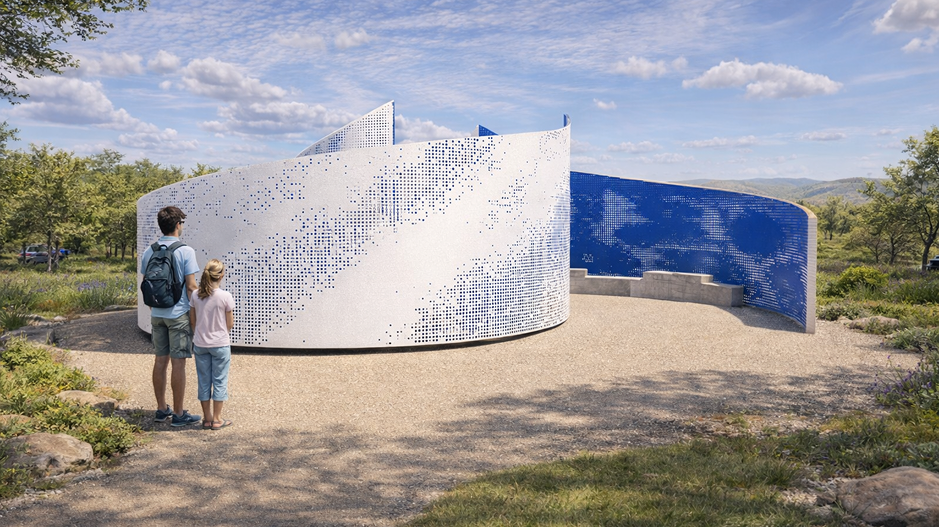
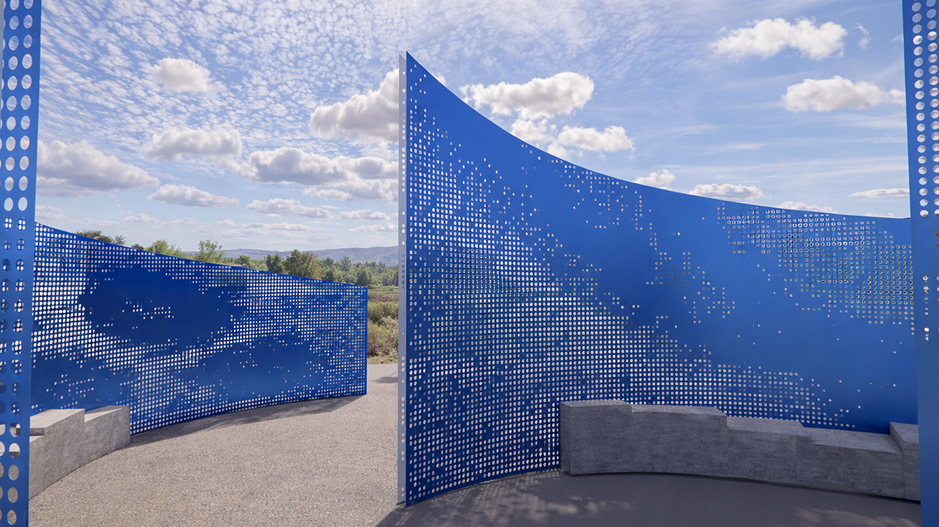
Currents concept render by IMO
We’re pleased to share Currents, our proposal for the Water Conservation & Resiliency Public Art Project at Camel’s Back Park in Boise, Idaho, where Immersive Material Office was selected as a finalist and runner-up.
Located at the threshold between Boise’s neighborhoods and the foothills beyond, Camel’s Back Park functions as both a civic gathering space and a gateway to the landscape that shapes life throughout the Treasure Valley. In a high-desert environment where water sustains both community and ecology, we saw an opportunity to create a public artwork that made visible the often-overlooked systems connecting water, stewardship, and collective resilience.
Water as a Shared System
The concept for Currents emerged from a simple observation: water and communities often follow the same logic of movement.
Snowmelt gathers into rivers. Runoff threads through neighborhoods and parks. Water infiltrates the ground, recharges aquifers, and begins the cycle again. Communities move in similar ways. People arrive, circulate, pause, gather, and disperse.
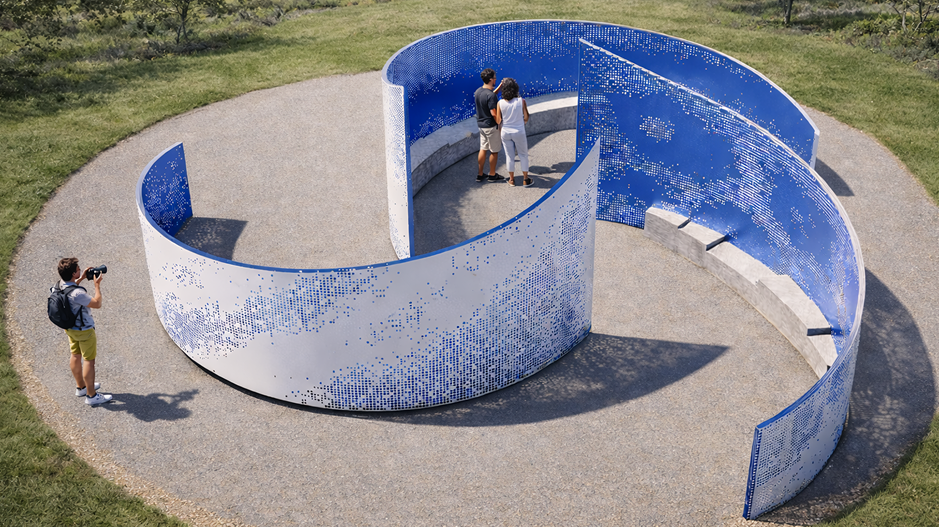
Rather than creating a monument to water conservation, we wanted to create a space where visitors could experience these patterns directly. The project was conceived as a confluence space—a place where natural systems and human behavior become legible through form, light, and movement.
At its core, Currents proposed that resilience is rarely the result of a single action. Like a watershed, it emerges through accumulation, coordination, and time.
Translating Watersheds into Architecture
The proposal took inspiration from watershed-scale relationships throughout the Boise River system: seasonal snowmelt, surface flow through river corridors, and the quieter processes of infiltration and recharge that occur below ground.
These dynamics informed a sculptural pavilion composed of three curved perforated panels referencing the North Fork, Middle Fork, and South Fork of the Boise River. Arranged around a shared gathering space, the panels created a series of channels and openings that guided movement through the artwork much like water moves through a landscape.
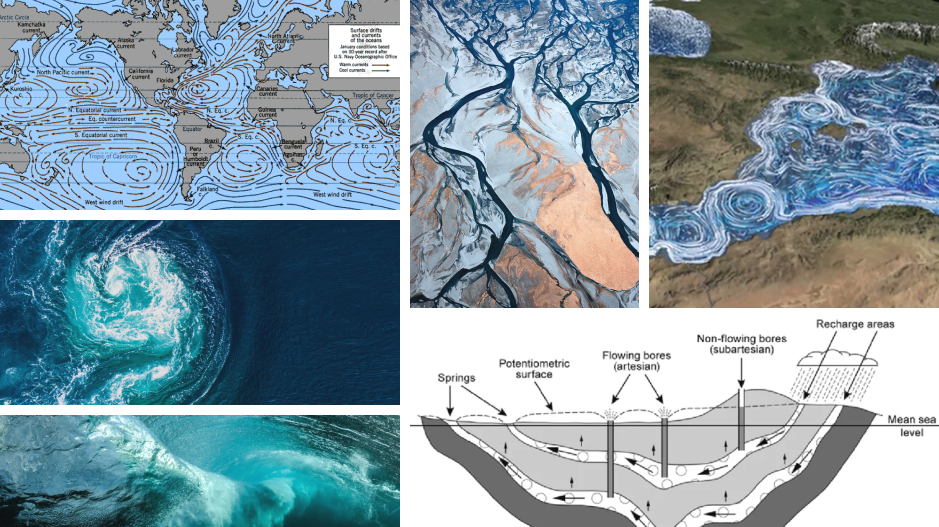
Thousands of perforations accumulated into larger pattern fields across the surface. Individually, each opening functioned like a droplet. Collectively, they formed visible currents, eddies, and porous zones that suggested larger systems of flow and exchange.
The overall form drew inspiration from topographic contour lines and river morphology, translating the language of watersheds into an inhabitable architectural experience.
Light, Shadow, and Time
Because water is fundamentally tied to cycles and change, the project was designed to reveal different qualities throughout the day and across the seasons.
As sunlight moved across the pavilion, perforations would cast shifting fields of light and shadow across the interior. The effect would continuously evolve, transforming the space without requiring any moving parts or mechanical systems.
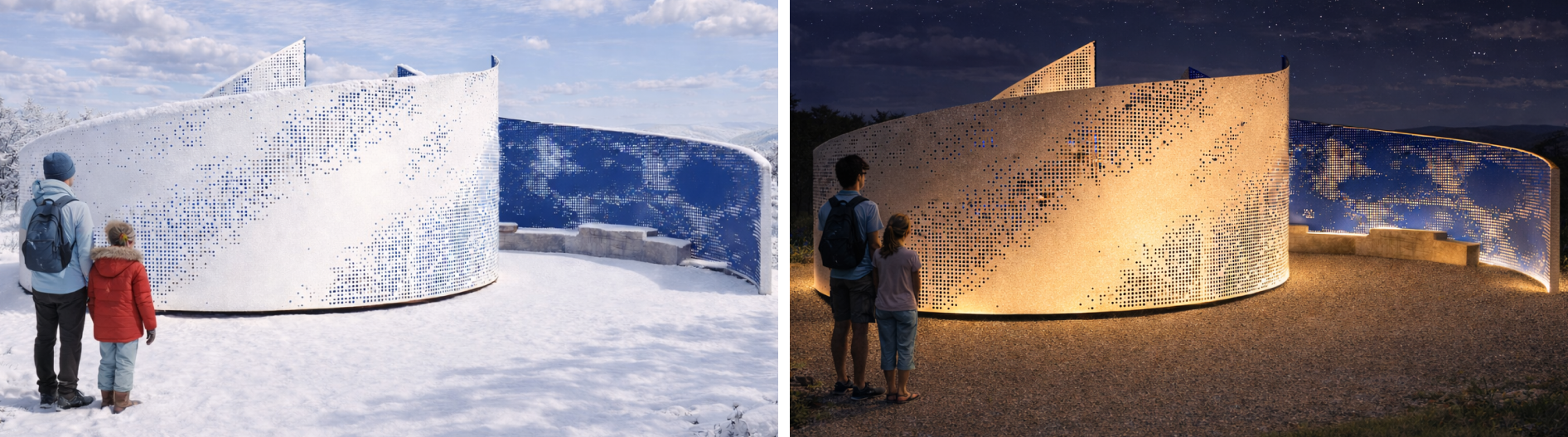
In winter, snow gathering around the structure would emphasize its relationship to seasonal water cycles. During evening hours, integrated lighting would illuminate the interior, turning the pavilion into a warm beacon within the park and extending its presence beyond daylight hours.
The artwork’s motion came entirely from environmental conditions—sunlight, weather, and the movement of visitors through the space.
Learning Through Experience
An important aspect of the proposal was the belief that public education can be integrated into an artwork without relying on traditional interpretive signage.
The project incorporated durable learning cues directly into seating and paving elements. Small icons and graphic inlays would introduce ideas related to snowmelt, runoff, infiltration, recharge, and everyday stewardship practices.
These interventions were intentionally subtle. Rather than instructing visitors through large informational panels, they invited discovery through exploration and conversation.
We envisioned developing these educational components alongside local partners, watershed educators, city staff, and community stakeholders to ensure the content reflected Boise’s specific environmental priorities and lived experiences.
Designed for Camel’s Back Park
The proposed pavilion was carefully developed for its site within Camel’s Back Park. Positioned among mature trees and existing pathways, the structure maintained open sightlines and accessibility while creating a defined place for gathering. Its circular footprint allowed visitors to enter from multiple directions, reinforcing the idea of convergence and flow while preserving flexibility for events and everyday park use.
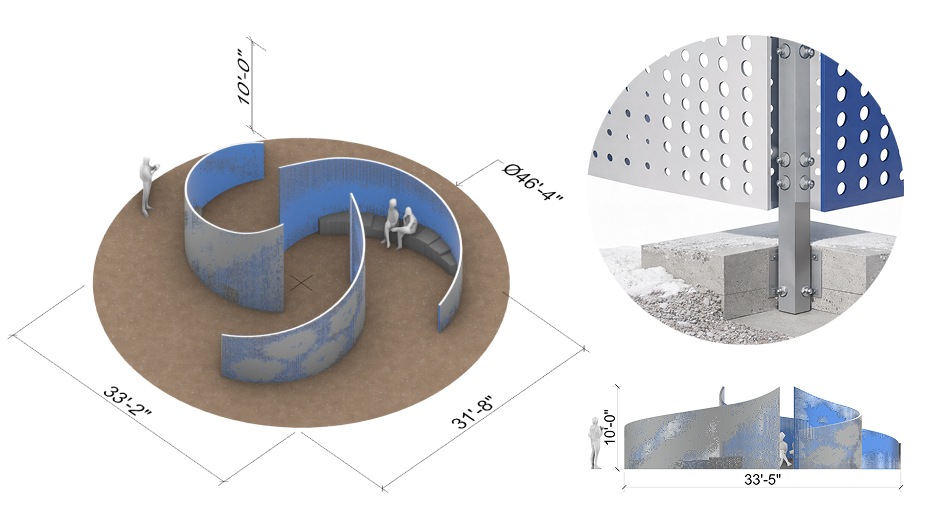
The artwork functioned simultaneously as a destination, a resting place, and a passage through the park. It was designed for long-term public use. The proposal relied on durable materials, modular construction, integrated seating, and low-maintenance systems. No motors, water features, or kinetic mechanisms were required. The changing experience emerged naturally from light, weather, and human activity.
Looking Forward
While Currents will not move forward to realization, the ideas behind the project continue to resonate with us. Public art has a unique ability to transform invisible systems into shared experiences. Whether those systems are ecological, social, or cultural, the most meaningful public spaces often help us better understand our relationship to the places we inhabit together.
We’re grateful to the City of Boise, the selection committee, and everyone involved in the process for the opportunity to develop and share this vision. Projects like this allow us to explore how art, infrastructure, education, and public space can intersect in ways that foster curiosity, reflection, and connection.