
From Place to Presence: Designing Spaces for Emotional Engagement
Modern experience design often struggles to create genuine emotional connections. Too many branded installations, public environments, and cultural spaces become little more than Instagram backdrops: visually polished, briefly visited, and quickly forgotten. How can we design environments that invite people to be present, participate, and feel a sense of community?
One answer lies in blending placemaking principles with the tenets of emotional presence. By taking cues from urban placemaking strategies designers can craft experiences that are immersive, meaningful, and rooted in human connection.
Places are made, not found
It starts by observing how people already use a space, then engaging the community as an active participant in shaping its future. Instead of imposing a top-down design, placemaking draws from local insight, culture, history, and lived experience. The result is a space people recognize as their own. Public spaces thrive because when they respond to people’s needs, behaviors, and aspirations.
One of the most useful placemaking ideas is the Power of 10+, which suggests that strong public places give people many reasons to be there. In fact, “it takes a place to create a community and a community to create a place,” as the Project for Public Spaces mantra goes. A great destination is rarely defined by one attraction alone. It is built through layers: seating, shade, food, public art, performance, play, gathering space, quiet corners, cultural markers, and moments of discovery. Each layer gives people another reason to stay.
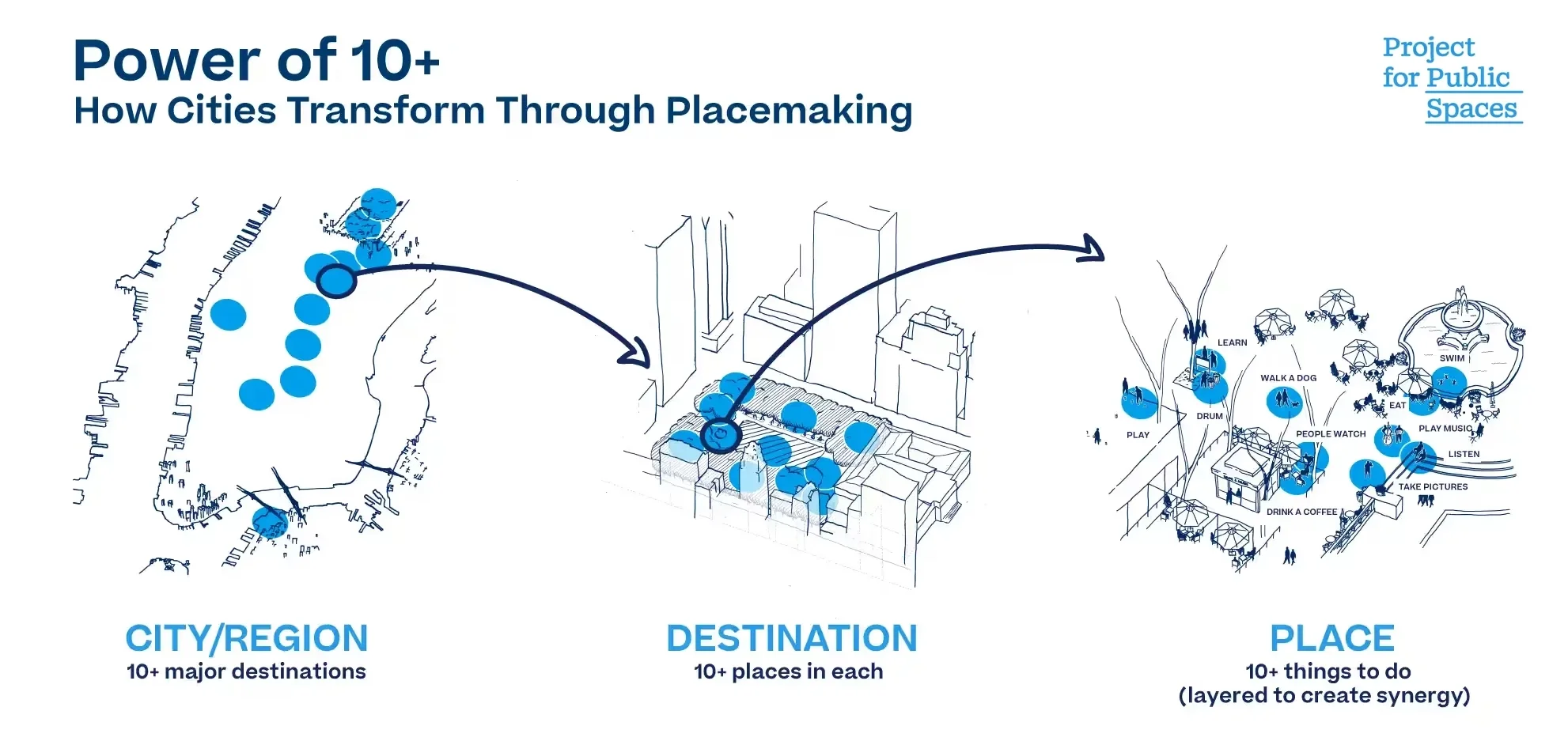
Power of 10+ framework by Project for Public Spaces
This is where public art and experiential design start to overlap. A downtown square with a sculpture people can walk through, a shaded bench that encourages conversation, a small stage for local music, and a café nearby is not just more active. It is more emotionally legible. Different people can find different ways into the experience. Some come to socialize. Some come to watch. Some come to rest. Some come to explore.
The best places tend to share a few core qualities. They are accessible and connected to their surroundings. They feel comfortable and inviting. They offer activities that draw people in. They create sociable conditions where interaction can happen naturally. In other words, a successful place does not merely occupy space. It feels alive.
People do not form attachments to spaces through aesthetics alone. They form through use, memory, comfort, surprise, and participation. A bench becomes meaningful because of the conversation that happened there. A plaza becomes beloved because it held a market, a protest, a performance, or a quiet lunch in the sun. A public artwork becomes iconic because people keep finding new reasons to encounter it.
Beyond Aesthetics, Toward Engagement
A space can be visually impressive and still fail to hold attention. It can photograph well and still feel hollow in person. Emotional engagement requires more than spectacle. It requires presence: the feeling that someone is fully aware of where they are, what they are doing, and how the environment is affecting them.
That presence is shaped through many variables at once. Story, spatial sequence, sound, light, materiality, scale, pacing, and social behavior all contribute to whether someone feels like a passive viewer or an active participant. The strongest environments do not simply show people something. They pull people into a condition.
This is especially important in a culture saturated with distraction. People are constantly moving through alerts, screens, noise, and visual clutter. To create presence, a space has to interrupt that drift without becoming aggressive. It has to offer a reason to slow down. Sometimes that reason is curiosity. Sometimes it is comfort. Sometimes it is awe, intimacy, play, or a feeling of collective participation.
Immersive design succeeds when every element supports that shift. The environment does not have to be loud or technologically complex. It has to be coherent. A narrow passage, a change in lighting, a material transition, a sound cue, or a simple rule of engagement can all signal that the visitor has entered a different mode of attention.
A powerful spatial experience makes people feel that they are not just looking at something. They are inside something. They are implicated in it. Their movement, attention, and choices matter.
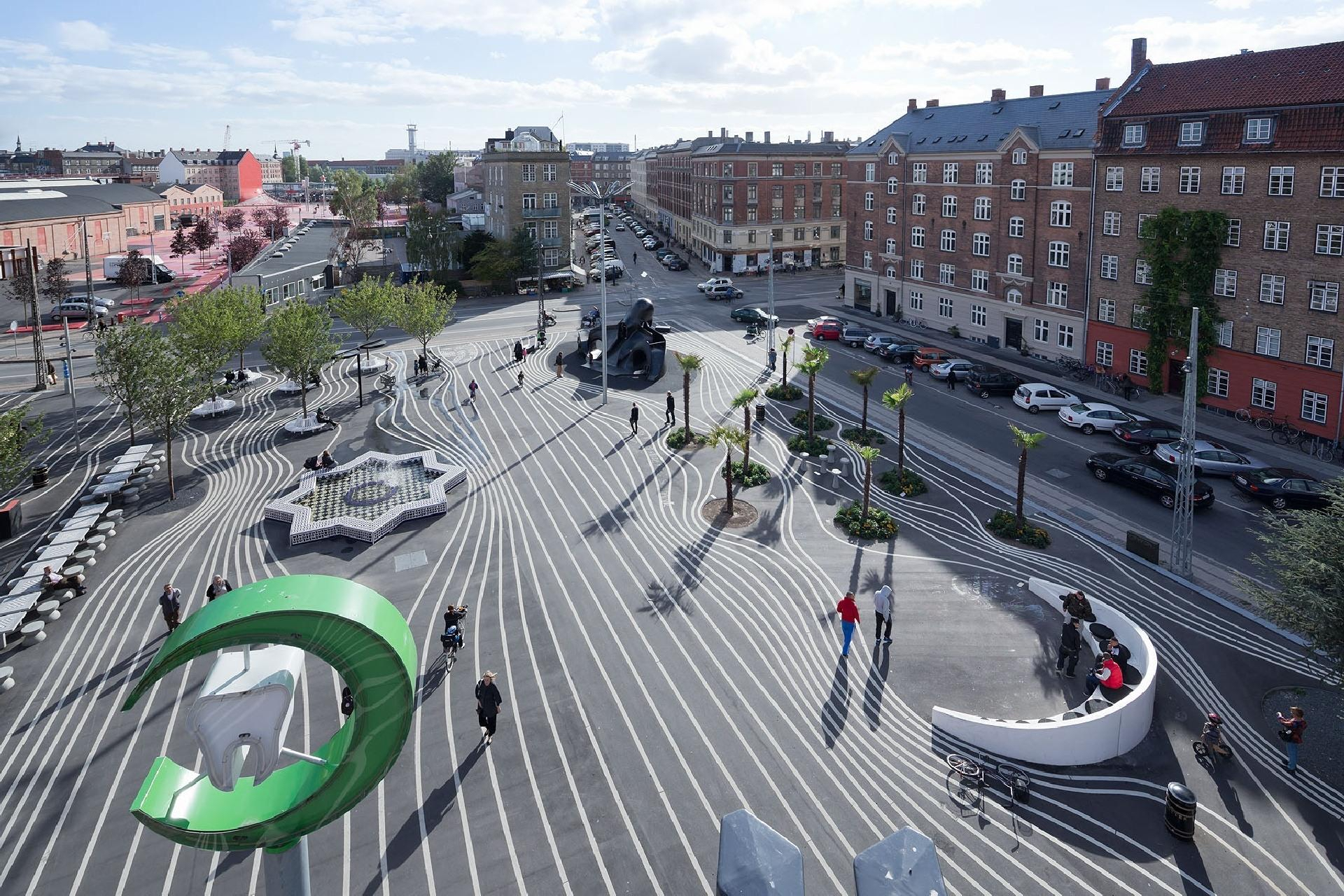
Superkilen by BIG, Topotek1 and Superflex
Community, Purpose, and Participation
The connection between placemaking and emotional experience design becomes clear when we look at their shared principles. Both understand that people are the center of the work. Both recognize that connection cannot be forced. Both rely on participation, purpose, and context to create meaning.
1. Start with a Unifying Vision and Let the Community Shape It
Strong spaces begin with a clear reason for existing. Not just a theme, campaign, or visual direction, but a deeper purpose. What does this place need to do for people? What kind of connection, reflection, energy, or behavior should it support? What is missing from the environment today?
In placemaking, the community is often the most important source of intelligence. Local stakeholders know where people gather, what feels unsafe, what feels underused, what stories are already embedded in the place, and what would make the space feel more alive. When that knowledge shapes the design process, the result is more likely to feel relevant rather than imposed.
A unifying vision gives every design decision a role. It informs the layout, materials, lighting, programming, tone, and rhythm of the experience. It also helps prevent the work from becoming a pile of disconnected features. When a space is rooted in a shared purpose, people can feel the coherence even if they cannot name it.
Material choices are part of that purpose. Reflective steel can create a dialogue with the surrounding environment. Reclaimed timber can suggest continuity, stewardship, and warmth. Translucent surfaces can evoke openness, softness, and light. Stone can communicate permanence. Fabric can introduce intimacy and movement. In public art, materials are rarely decorative alone. They become part of the narrative.
For brand activations, cultural spaces, workplaces, hospitality environments, and public installations alike, materiality is one of the first ways a space communicates its values. Before a visitor reads a wall graphic or understands a concept, they have already formed an impression through texture, weight, reflection, temperature, and sound.
2. Design for Sociability and Participation
Great public spaces encourage people to interact with the environment and with each other. This does not always mean forced participation or overt programming. Often, it means arranging conditions so that social behavior can happen naturally.
A seating arrangement can encourage conversation. A public artwork can give strangers something to react to together. A tactile surface can invite touch. A surprising visual effect can slow people down and create a shared moment of discovery.
Public art offers some of the clearest lessons here because it faces the same challenge as branded experiences: engaging distracted people who did not ask to stop. Successful installations rarely demand attention outright. They create invitations.
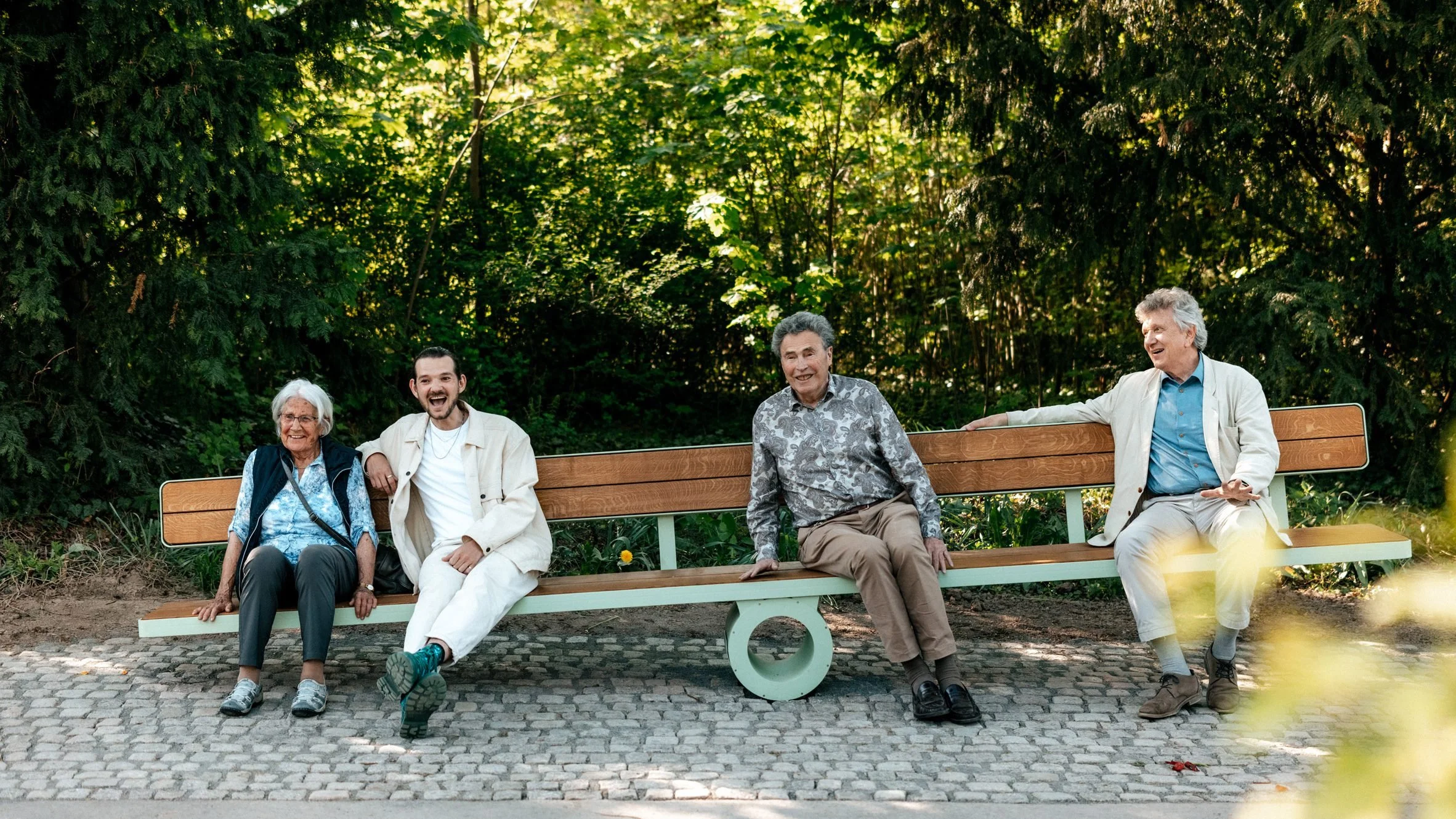
Balance Bench by Martin Binder
The Balance Bench in Germany turns cooperation into a physical requirement: one person sitting alone causes the bench to tilt, while two people sitting across from each other bring it into balance. The interaction is simple, legible, and social. It does not explain its meaning through text. It lets the body understand the idea.
Love Continuum in London works differently. Its bright sculptural form invites approach, touch, and movement, but the full reading of the piece only appears from a particular vantage point. Discovery becomes part of the experience. Visitors are rewarded for moving around it, testing perspective, and staying curious.
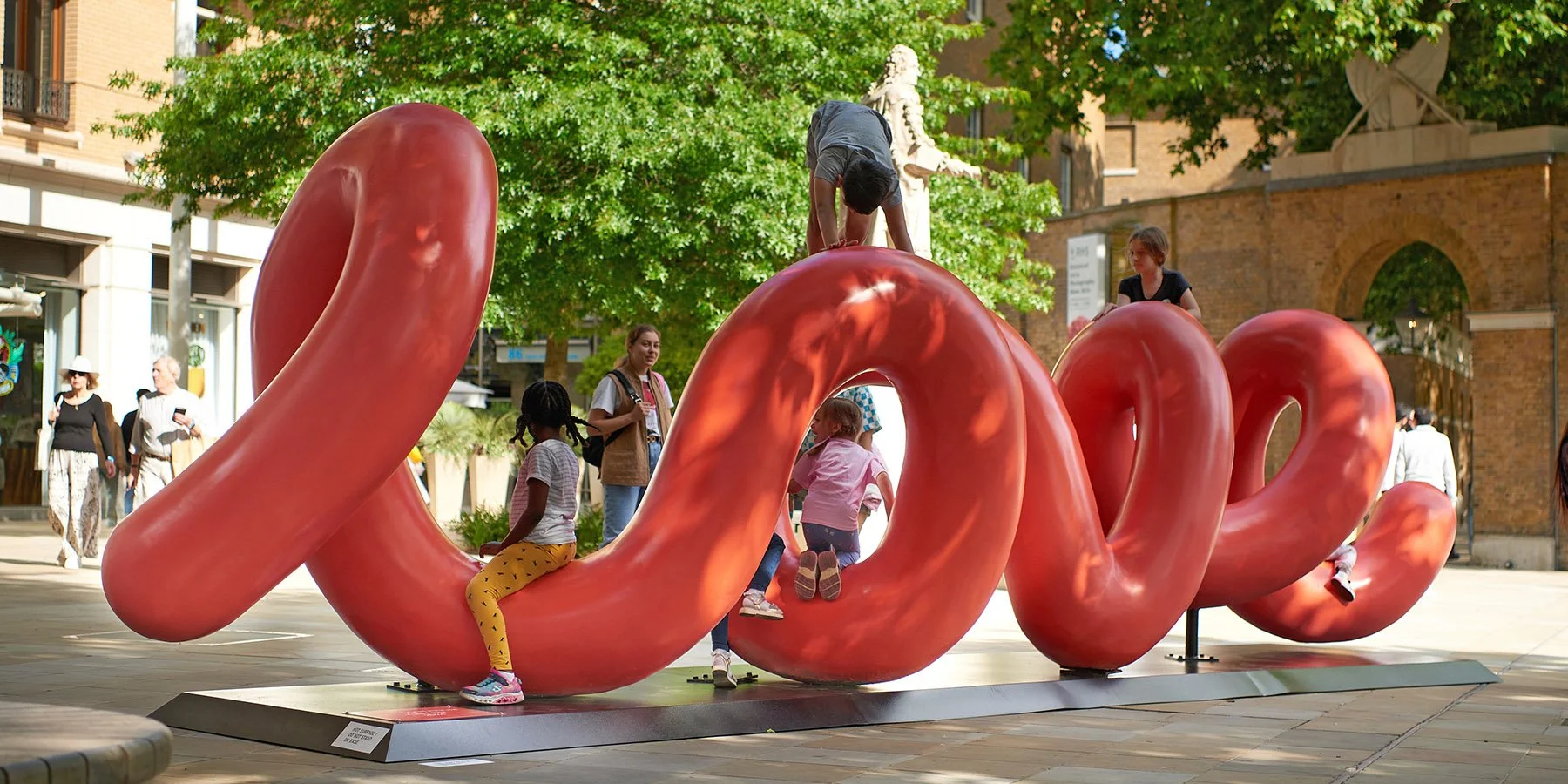
Love Continuum by Yoni Alter
These projects work because interaction feels inevitable rather than prescribed. They respect human instinct: to touch, move, test, gather, point, laugh, and share. That is the lesson many experiential spaces miss. Interaction does not mean asking people to press a button or scan a QR code. It means designing conditions where participation feels natural.
When people participate, they become co-creators of the experience. They are no longer just consuming a designed environment; they are completing it. Their presence activates the work. Their movement changes what is seen. Their choices shape the sequence. Their social behavior becomes part of the atmosphere.
This is where emotional engagement deepens. People remember what they helped make, what they discovered themselves, and what they experienced with others.
3. Layer Activities to Create Journey and Discovery
A compelling experience rarely reveals everything at once. It unfolds. A visitor might begin with a threshold moment, move into a zone of orientation, encounter an interactive element, discover a quieter space, and end with a collective or reflective moment. Each layer should offer something distinct while still contributing to the larger whole.
This kind of sequencing keeps people mentally present. It gives them agency without abandoning structure. They can choose how to move, where to pause, and what to engage, but the space still carries them through a designed rhythm.
Light often acts as the connective tissue between these moments. During the day, a space may rely on texture, shadow, reflection, and material depth. After dark, illumination can transform the same environment into something theatrical, communal, or intimate. Lighting does more than make a space visible. It guides attention, sets emotional tone, marks transitions, and gives people a reason to experience the work again under different conditions.
The best spatial interventions build atop each other, encouraging guests to construct their own experience that evolves over time. They change with weather, season, time of day, density of people, and patterns of use. That evolution gives a place longevity. Instead of delivering a single static image, it creates a living field of experiences.
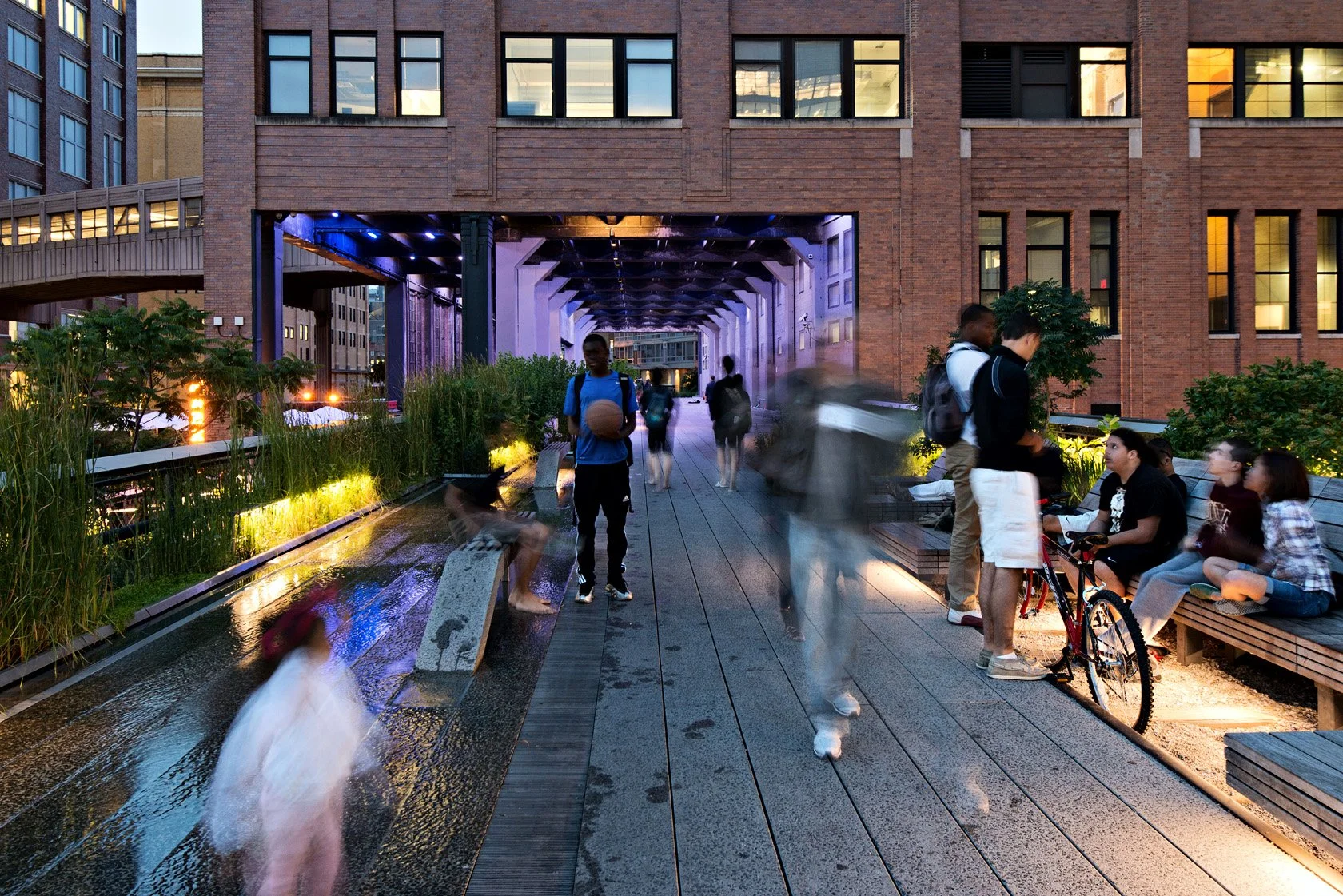
The High Line NYC (Sundeck Water Feature & Chelsea Market Passage)
4. Embrace Ephemeral Moments and Rituals
Not everything meaningful in a space needs to be permanent. Some of the most memorable experiences are temporary, spontaneous, or ritualized.
In public life, this might be a street musician at dusk, a seasonal market, a temporary mural, a projection that appears only at night, or a gathering that happens once a year. These moments create stories. They give people a reason to say, “You had to be there.”
Temporary interventions can also make spaces feel alive before a larger transformation is complete. Murals, pop-ups, performances, pilot programs, and small-scale activations can test ideas, gather feedback, and build momentum. They allow a place to evolve through use rather than waiting for a perfect final condition.
In experiential design, ephemeral moments create emotional peaks. A reveal, a performance, a shared ritual, a closing gesture, or an unexpected transformation can leave a stronger impression than the most expensive permanent feature. The point is not novelty for its own sake. The point is to create a moment that feels specific, embodied, and unrepeatable.
Rituals are especially powerful because they give people a role. A no-phone moment. A shared silence. A collective gesture. A threshold action. A participatory contribution. These small structures can shift people from passive attendance into active presence.
People bond through these moments. They remember what happened, who they were with, and how it felt. Over time, those memories become part of the identity of a place.
Designing Spaces People Actually Feel
Placemaking and emotional experience design share the same fundamental ambition: to create spaces that enrich human experience. Not just spaces that look good, perform well, or generate attention, but spaces that people can feel attached to.
The strongest environments are comfortable and curious at the same time. They offer ease, but also discovery. They support gathering, but also reflection. They are coherent enough to feel intentional and open enough for people to bring their own meaning.
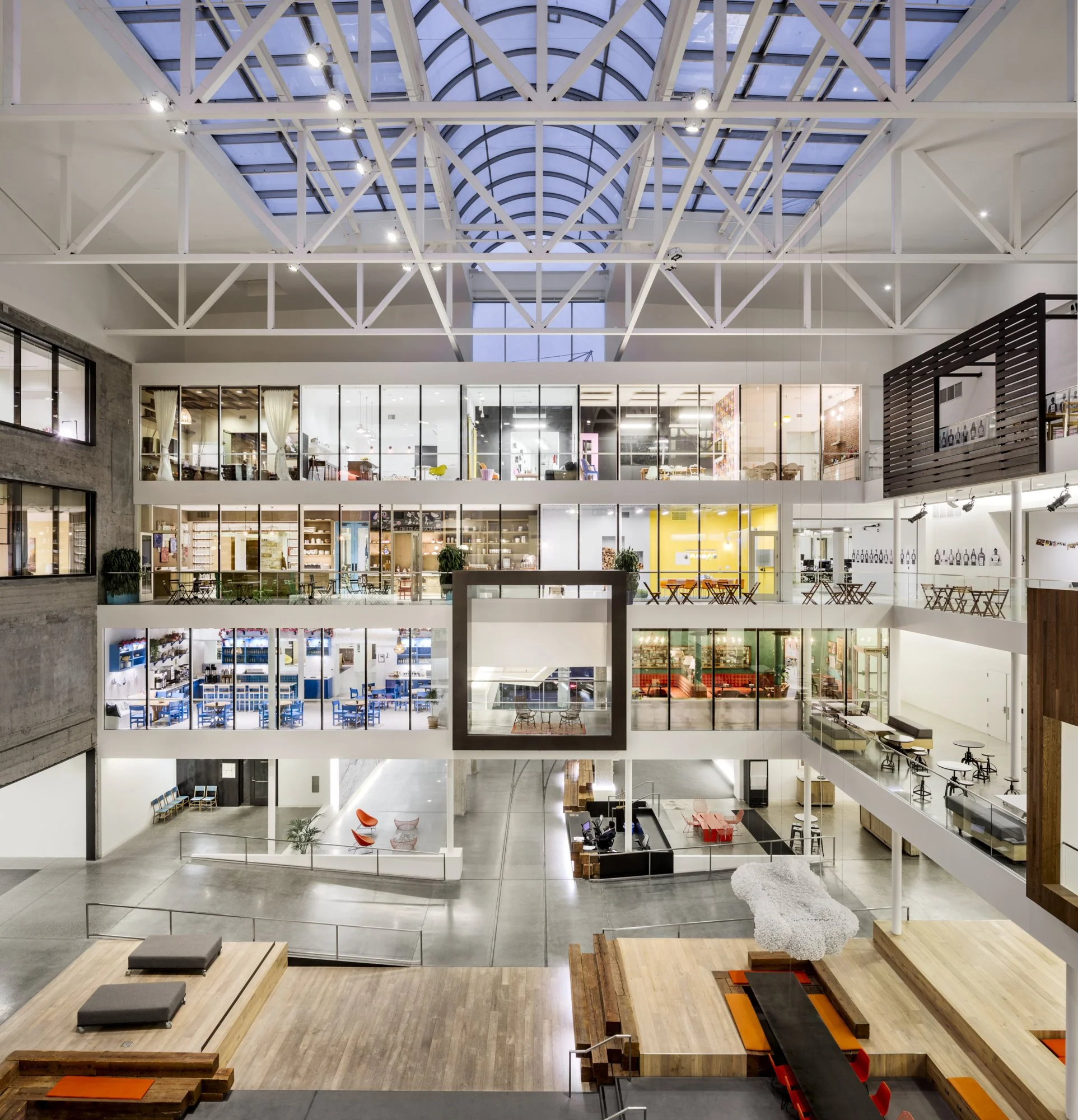
Airbnb’s HQ “neighborhoods” spatial strategy
For designers, artists, brands, developers, cultural institutions, and civic clients, the takeaway is clear: emotional engagement is not a layer added at the end. It is the result of decisions made from the beginning.
When crafting your next experience or place, remember to:
Engage the community and define a shared purpose: Let local culture and needs inform a unifying vision, so the design resonates authentically .
Encourage participation and sociability: Set the stage for interaction – through layout, activities, or simple rules that bring people together and keep them present .
Layer uses and experiences: Provide multiple things to do and discover, creating an organic journey that maintains interest and invites return visits .
Include spaces to breathe and reflect: Just as important as activity is comfort – “sacred” niches or relaxing areas allow people to recharge emotionally (think shady benches, cozy lounges) .
Embrace the unexpected: Incorporate art, events, or rituals that can spark spontaneous joy and “awe” moments, giving your space or event a story people will share.
To design for presence is to design for the human being inside the space. Not the rendering. Not the headline. Not the social post. The person. When a space gives people a reason to slow down, engage, and participate, it becomes more than a location. It becomes an emotional connection.