
The Cost-Benefit Ratio: Towards Hybrid Experiences
When clients approach us, we often encounter a striking difference in how value is perceived across digital and physical elements. Despite the material, fabrication, and logistical complexity involved in physical environments, clients are often more willing to invest heavily in digital systems that require constant maintenance, iteration, and periodic redesign. That tension reveals something deeper about how companies evaluate risk, adaptability, and return.
Digital systems align naturally with contemporary business culture because they are fast, measurable, and continuously adjustable. A redesigned e-commerce flow can increase conversion rates within days. A marketing site can generate trackable engagement metrics almost instantly. Analytics dashboards provide constant feedback loops that reinforce the sense of optimization and momentum. The relationship between investment and outcome feels direct.
Websites, apps, and branded platforms also operate within rapidly shifting technological and aesthetic cycles. A digital product can feel contemporary one year and outdated the next. Entire interaction paradigms evolve in months. User expectations shift. Interfaces age quickly. Yet this ephemerality is often accepted because digital systems prioritize responsiveness. They can adapt rapidly to changing behaviors, markets, and expectations.
The challenge emerges when all forms of experience are evaluated according to the same metrics and timelines. Not all forms of value appear immediately, and not all meaningful returns can be reduced to dashboards, engagement statistics, or conversion funnels.
A well-designed interior, installation, or architectural intervention can shape perception and behavior for decades. These projects carry material permanence. Their value accumulates gradually through repeated exposure, familiarity, memory, and emotional association. Physical environments often generate slower, more atmospheric forms of return that are harder to isolate quantitatively, but no less impactful culturally.
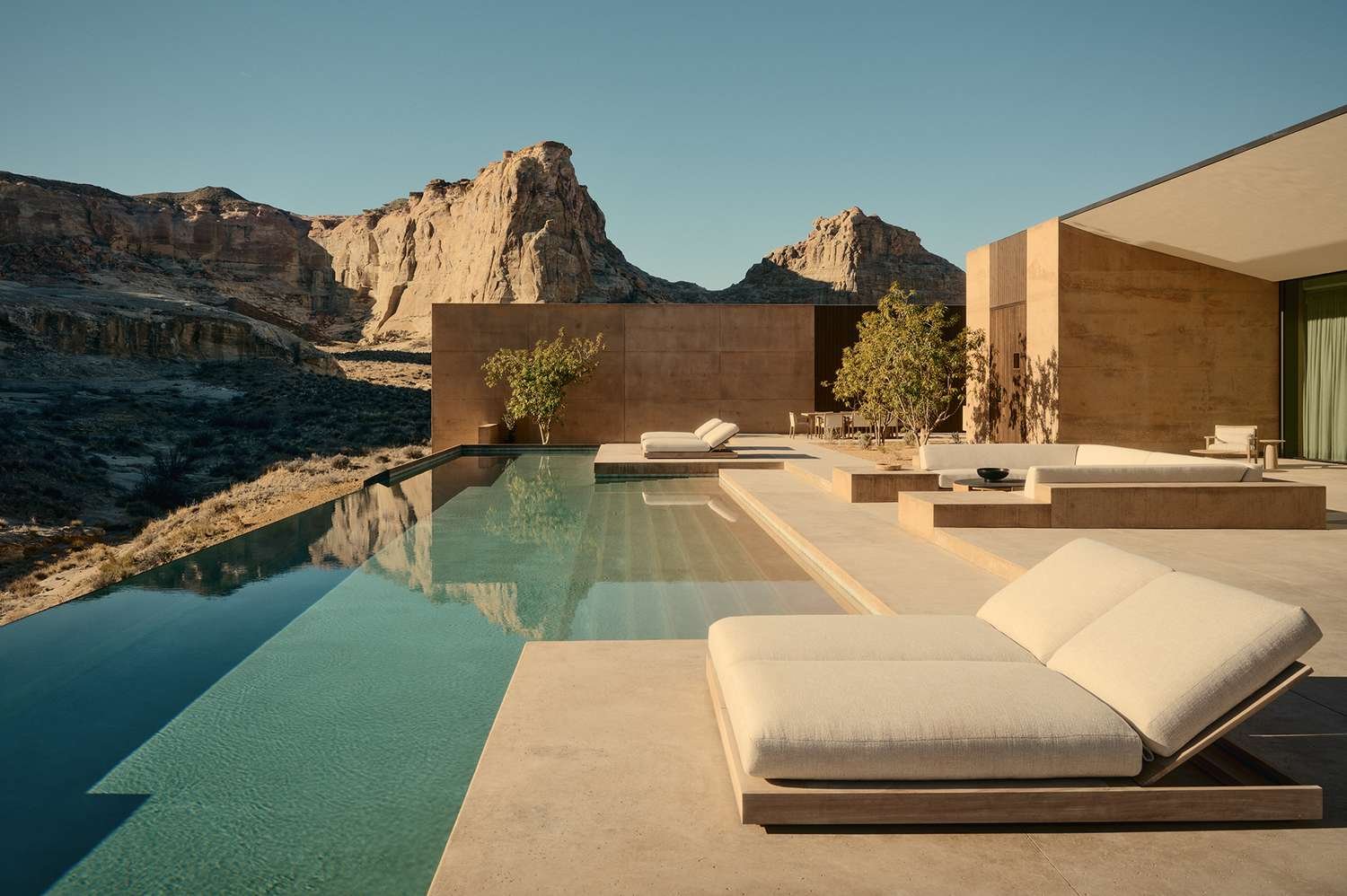
Utah resort, Amangiri, generates value through atmosphere, memory, and emotional association rather than immediate transactional metrics alone.
A thoughtfully designed retail environment may increase dwell time, customer loyalty, perceived brand value, or emotional affinity long before those effects become legible in a spreadsheet. A museum redesign may reshape public perception over years rather than quarters. A hospitality space may succeed not because of a single measurable interaction, but because people continue returning, photographing it, recommending it, and emotionally associating themselves with it.
These are not insignificant returns. They simply operate on different temporal and emotional frameworks.
Physical builds create conditions for memory, trust, identity, and belonging. Their value compounds gradually through repeated experience rather than immediate optimization. Businesses increasingly rely on physical spaces to differentiate themselves precisely because digital experiences have become ubiquitous and endlessly replicable. Almost any interface pattern can be reproduced. Atmosphere cannot.
The brands and institutions people remember most vividly are rarely defined by digital touchpoints alone. They are remembered spatially and emotionally: the scent upon entering a store, the acoustics of a restaurant, the textures of a hotel lobby, the scale of an installation, the quality of light within a space. These experiences resist easy quantification, but they shape perception at a much deeper level.
Physical projects also require a different type of commitment. Material procurement, fabrication, logistics, permitting, and installation create layers of permanence that make changes more consequential. Once built, physical environments cannot be patched as easily as software. That permanence increases both risk and hesitation. But it also communicates commitment in ways digital systems often cannot. Physical environments signal that a brand, institution, or organization intends to occupy real space in people’s lives—not merely compete for attention within a feed or browser tab.
Ultimately, the question is not whether digital or physical experiences are inherently more valuable. They simply produce different kinds of value. Digital systems optimize for responsiveness. Physical environments optimize for resonance. The most effective projects understand how to align the medium with the desired outcome—and how to orchestrate both together cohesively.
The Hybrid Experience Ecosystem
The most effective contemporary environments are not purely physical or purely digital. They operate as interconnected experience ecosystems where architecture, branding, media, interaction, and operational infrastructure work together continuously. In these projects, the question is no longer whether physical or digital systems are more valuable, but how each can be used intentionally to support specific experiential goals.
This becomes especially visible in projects that combine spatial design with responsive digital layers. Our cients are often energized by interactivity, personalization, responsive media, and data-driven engagement because these systems introduce adaptability, participation, and measurable feedback into physical environments. Digital layers allow experiences to evolve over time rather than remain fixed after installation.
But the most meaningful experiences rarely emerge from digital systems alone.
Physical environments provide the emotional and perceptual foundation that makes digital interaction meaningful in the first place. Materiality, atmosphere, acoustics, lighting, scale, circulation, and spatial sequencing establish the conditions for emotional connection long before a screen, sensor, or interface enters the experience. Digital systems may accelerate responsiveness, but physical environments anchor memory, presence, and identity.
When digital elements are removed entirely, environments can lose immediacy, adaptability, and participation. When physical elements are minimized, experiences can lose depth, permanence, and emotional resonance. Too far in either direction creates an imbalanced experience ecosystem.
The most compelling contemporary environments understand these systems as interdependent rather than oppositional. Technology is no longer treated as an applied layer or spectacle feature. Instead, it becomes embedded into the spatial logic of the environment itself—quietly shaping behavior, adapting to users, extending narrative, collecting insight, and reinforcing identity in real time.
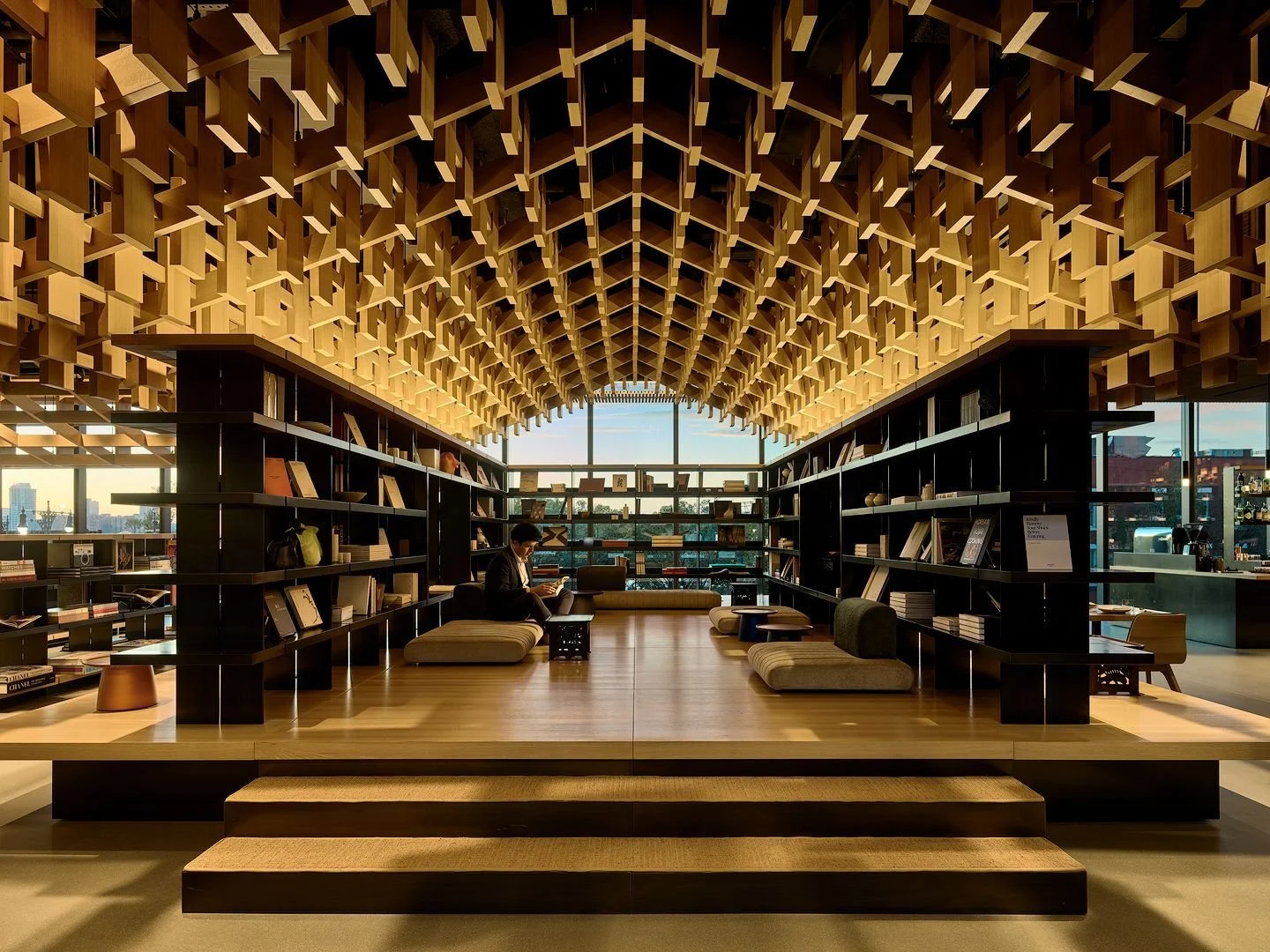
The cozy reading lounge inside Genesis House by Suh Architects in collaboration with TROVE
Genesis House offers a compelling precedent for this type of ecosystem thinking. The project merges hospitality, retail, exhibition, mobility storytelling, cultural programming, and digitally integrated infrastructure into a single spatial experience without allowing technology to dominate the experience. Instead, the digital systems recede into atmosphere and behavioral flow. What remains foregrounded is calmness, materiality, and spatial openness. As KyungEn Kim of Suh Architects describes it:
“In Korean landscape philosophy, one’s private yard is all the nature one can see sitting in one’s veranda-living space, or maru. Throughout Genesis House, we apply the same principles of leaving enough space to fill in for oneself.”
That philosophy feels increasingly important within contemporary experience design. The most effective responsive environments are often not the most visually saturated or technologically aggressive, but the ones that create room for interpretation, reflection, and emotional projection. In projects like Genesis House, digital infrastructure supports the experience quietly from within rather than demanding constant attention. The result feels like inhabiting an adaptive atmosphere.
This shift is blurring the boundaries between spatial design, UX, hospitality, retail, exhibition design, and digital product thinking. A flagship store now operates simultaneously as architecture, media platform, community space, content engine, and behavioral interface. Museums increasingly function as responsive cultural ecosystems rather than static containers for objects. Hospitality environments are evolving into adaptive experience platforms where physical atmosphere and digital systems continuously inform one another.
Physical environments build long-term cultural and emotional value. Digital systems accelerate participation, responsiveness, and adaptability. The most compelling contemporary environments understand these are not competing systems, but interdependent ones. The real opportunity lies in orchestrating them cohesively—creating environments that are emotionally resonant, behaviorally intelligent, and capable of evolving over time.