
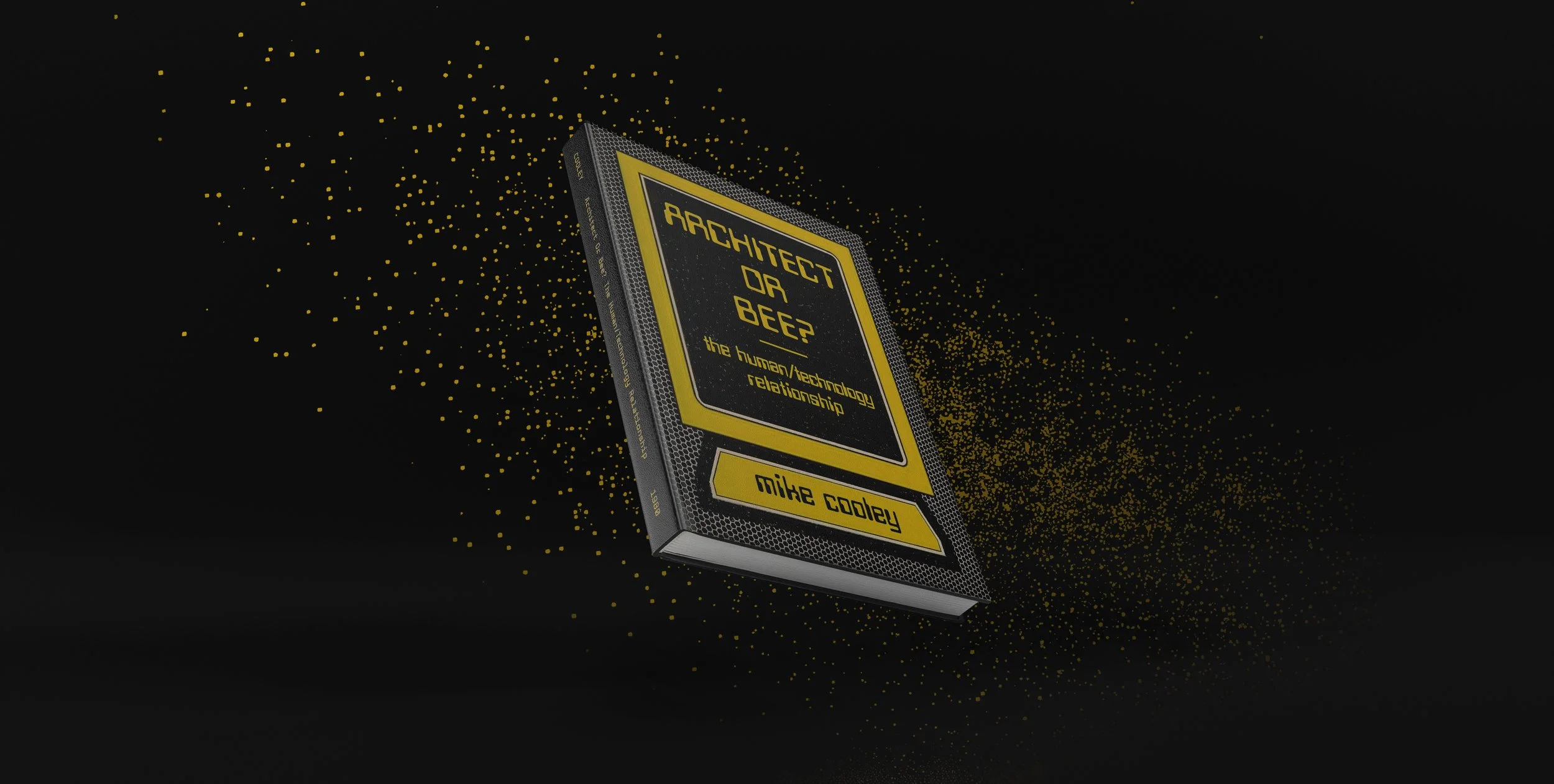
In 1980, industrial designer and labor theorist Mike Cooley published Architect or Bee?, a book that examined the relationship between human beings and the technological systems they create. Written during the rise of computerization and industrial automation, the book questioned whether technology was genuinely expanding human potential or simply reorganizing labor in ways that concentrated power and diminished human agency.
More than forty years later, those questions have returned with renewed urgency.
Artificial intelligence has become the defining technological conversation of our moment. New tools can generate images, write essays, create software, analyze data, and produce concepts at a speed that would have seemed impossible only a few years ago. Predictably, much of the discussion has focused on capability. What can AI do? Which professions will be affected? How quickly will these systems improve?
Cooley's work suggests a different set of questions. Rather than asking what technology is capable of, we should ask what kind of relationship it establishes between people and their work. Does it deepen participation or reduce it? Does it expand human creativity or merely accelerate production? Does it help people become more engaged with the world around them, or does it gradually distance them from the very processes that once gave their work meaning?
These questions sit at the center of Architect or Bee?, and they may be even more relevant in the age of AI than they were in the age of automation. The title itself originates from a comparison made by Karl Marx between an architect and a bee. A bee can construct a remarkably sophisticated hive, but it does so through instinct. An architect, by contrast, imagines the structure before it exists. The project is first conceived mentally and only later realized physically. For Marx and later for Cooley, this distinction represented something fundamental about human creativity. The value of human work was not simply the ability to produce things. It was the ability to imagine possibilities, evaluate alternatives, and intentionally shape the future.
The current conversation around AI often obscures this distinction. Much of the excitement surrounding generative tools comes from their ability to produce outputs that resemble the products of human creativity. Images, texts, videos, and designs can now be generated almost instantly. Yet generation and intention are not the same thing.
A system can produce thousands of possibilities without understanding why any particular possibility matters.
This distinction may become one of the defining creative challenges of the coming decade. Historically, creative practice was constrained by production. Architects spent countless hours drafting. Designers iterated manually. Artists developed ideas through labor-intensive experimentation. Today, many of those production barriers are rapidly disappearing. The bottleneck is shifting from making things to choosing among them.
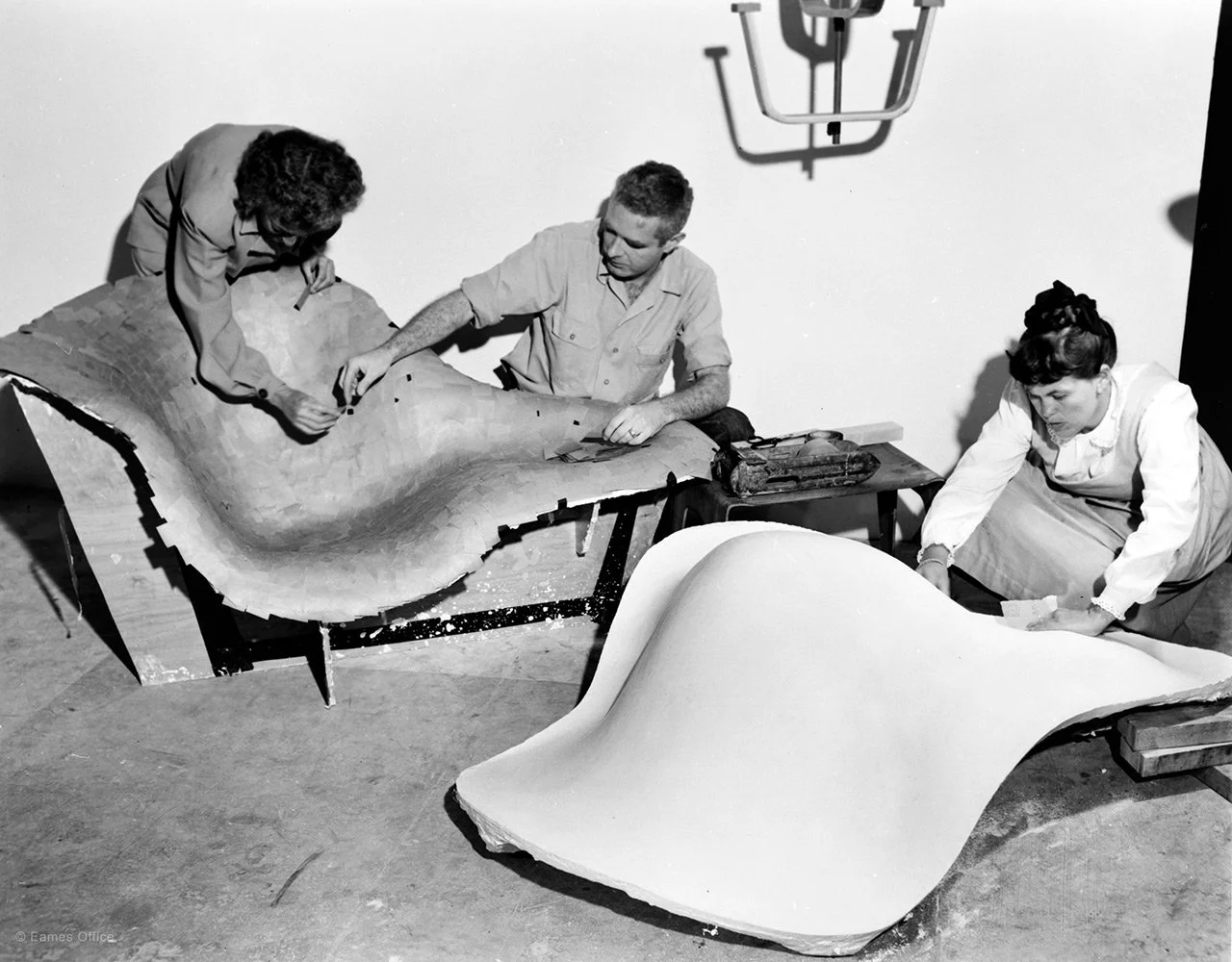
Charles and Ray Eames sculpting a prototype for their La Chaise lounge chair
As a result, judgment becomes increasingly valuable. The ability to recognize a meaningful idea, identify an appropriate response to context, understand cultural significance, or anticipate how people will experience a place cannot be reduced to the generation of options alone. In many respects, creative roles become even more important as generative systems improve. The challenge is no longer producing possibilities. The challenge is understanding which possibilities should exist.
This connects directly to another of Cooley's central ideas: tacit knowledge. Throughout the book, he argues that some forms of intelligence cannot be fully captured through formal systems. Experienced builders, machinists, designers, craftspeople, and technicians often possess knowledge that is difficult to articulate but invaluable in practice. They recognize patterns, anticipate problems, and make decisions based on years of accumulated experience. Expertise emerges through making, observing, testing, and refining rather than simply… synthesizing information.
Anyone who has spent time in fabrication shops, design agencies, construction sites, or artist studios recognizes this phenomenon immediately. A fabricator can often sense that something is wrong before measurements reveal the issue. A designer may know that a composition feels unresolved long before identifying the specific reason. An architect can walk through a space and intuitively understand that proportions, circulation, or lighting need adjustment.
These judgments emerge from prolonged engagement with materials, environments, and processes. They are developed through participation rather than abstraction.
The significance of tacit knowledge becomes particularly important as AI systems increasingly mediate creative work. Many contemporary tools excel at manipulating representations of reality. They can generate convincing images of materials, spaces, objects, and experiences. However, representing something is fundamentally different from understanding it. There’s an important distinction between generating the appearance of knowledge and cultivating discernment through experience.
For practices operating at the intersection of art, architecture, and experience design, this distinction matters enormously.
Our work often begins with research, narrative development, computational tools, and digital visualization. Yet projects ultimately succeed or fail through their relationship to reality. Light behaves in specific ways. Materials weather differently than expected. People move unpredictably through environments. Context reshapes intentions. The most important discoveries frequently emerge not from simulation but from engagement with actual places, actual materials, and actual people.
Technology can support that process. It can accelerate research, improve communication, reveal patterns, and expand creative possibilities. What it cannot do is replace the value of direct experience.
This is why Cooley's critique remains so relevant. Contrary to popular interpretations, Architect or Bee? is not an argument against technology. It is an argument against technological systems that diminish human participation. Cooley repeatedly emphasizes that tools should enhance human capability rather than extract and centralize it. The goal is not to reject innovation but to ensure that innovation serves human development instead of rendering it unnecessary.
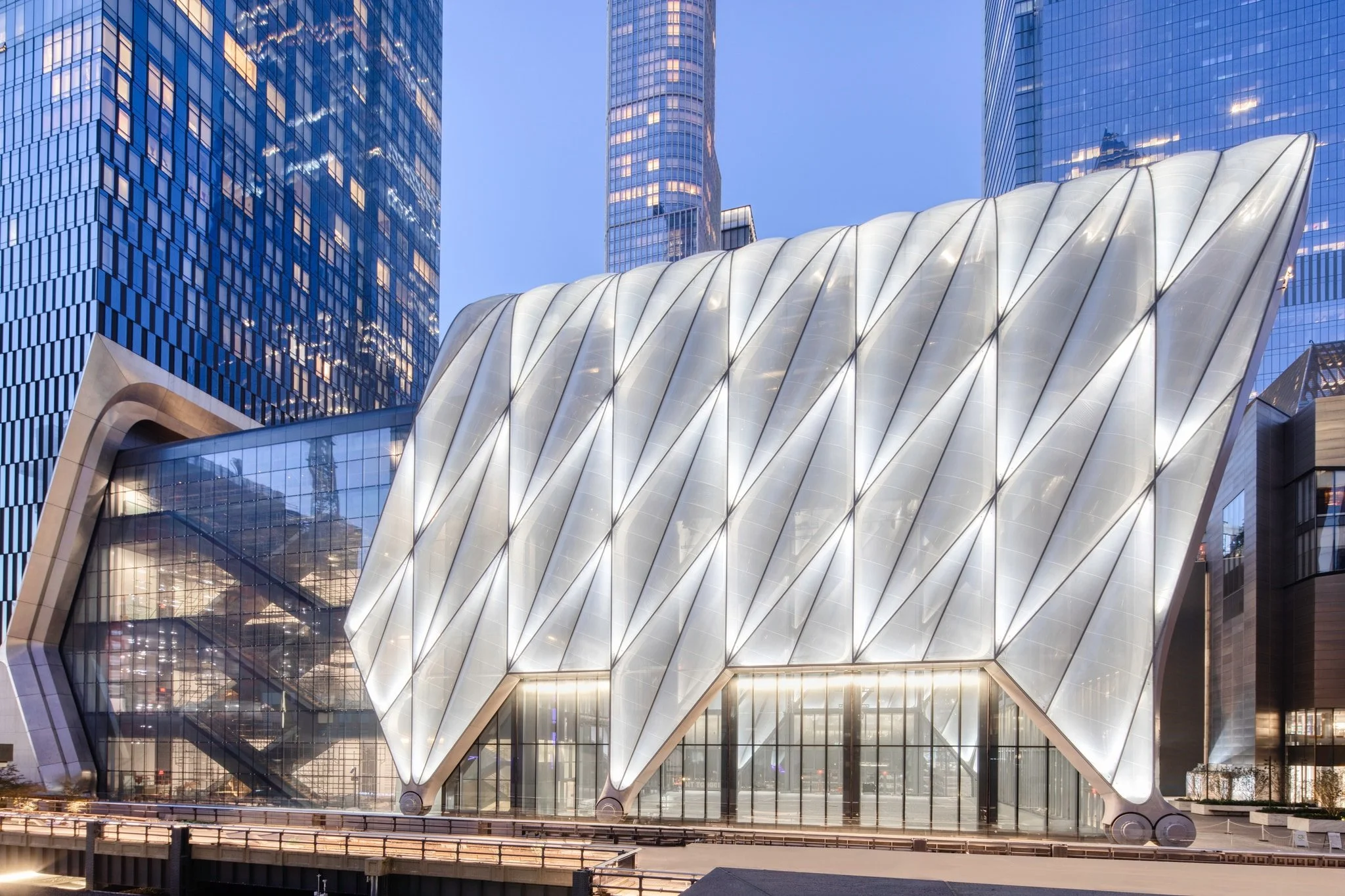
Diller Scofidio + Renfro’s The Shed demonstrates how architecture can leverage sophisticated technology to enable new forms of cultural expression and engagement rather than dictate them.
The most compelling applications of AI are likely to emerge from this perspective. Rather than replacing designers, artists, architects, and thinkers, these systems can help expand the range of possibilities available to them. They can act as collaborators, research assistants, visualization tools, and generative partners. They can make certain aspects of creative practice more accessible and more efficient.
The danger arises when efficiency becomes the sole metric by which value is measured.
If every technological advancement is evaluated exclusively through speed, scale, and cost reduction, then the qualities that make creative work meaningful become increasingly difficult to defend. Curiosity, experimentation, craftsmanship, reflection, and discovery rarely appear “efficient” from the perspective of a spreadsheet. Yet they remain essential to the production of meaningful cultural work.
Creativity has never been defined by the ability to produce outputs alone. It emerges from judgment, intention, curiosity, empathy, and imagination. These qualities are not technological problems waiting to be solved. They are deeply human capacities that shape how we understand the world and how we choose to transform it.
Ultimately, the question posed by Architect or Bee? is not whether machines will become more capable. That trajectory appears inevitable. The more important question is whether human beings will continue cultivating the creativity that make those capabilities worth having in the first place.
As AI becomes increasingly integrated into creative practice, the challenge is not to compete with machines at what they do best. The challenge is to remain conscious of what humans do best. The future of design, architecture, and art may depend less on the sophistication of our tools than on our ability to remember why we build, create, and imagine in the first place.