
Behind IMO’s Tagline: Purposefully Designed, Artfully Realized
At the heart of the Immersive Material Office is a paradox we embrace daily: the tension between the logic of Design and the intuition of Art. Our tagline “Purposefully Designed, Artfully Realized” isn’t simply a slogan—it is the operational blueprint behind every immersive environment, workplace experience, public art installation, and spatial design project we undertake. While these ideas are inseparable in practice, unpacking them individually reveals the opportunity that exists between utility and beauty, system and intuition, function and meaning.
Part 1: Purposefully Designed
Design, by definition, is a problem-solving discipline. When we say a space is “purposefully designed,” we are describing the hidden framework that transforms architecture into experience. Beneath every memorable environment lies an invisible choreography. The logic of human flow is the discipline of understanding how people move, gather, pause, orient themselves, and interact with one another over time. It considers not only circulation, but emotion, behavior, and perception. How should someone arrive? Where should moments of connection occur? Where is quiet needed, and where is energy encouraged? How does light, sound, and scale affect the way people engage with a space?
Whether designing a workplace, cultural destination, retail environment, or immersive installation, the goal is not simply to house activity, but to support human behavior. Spaces should encourage interaction, foster curiosity, and create moments of comfort and discovery.
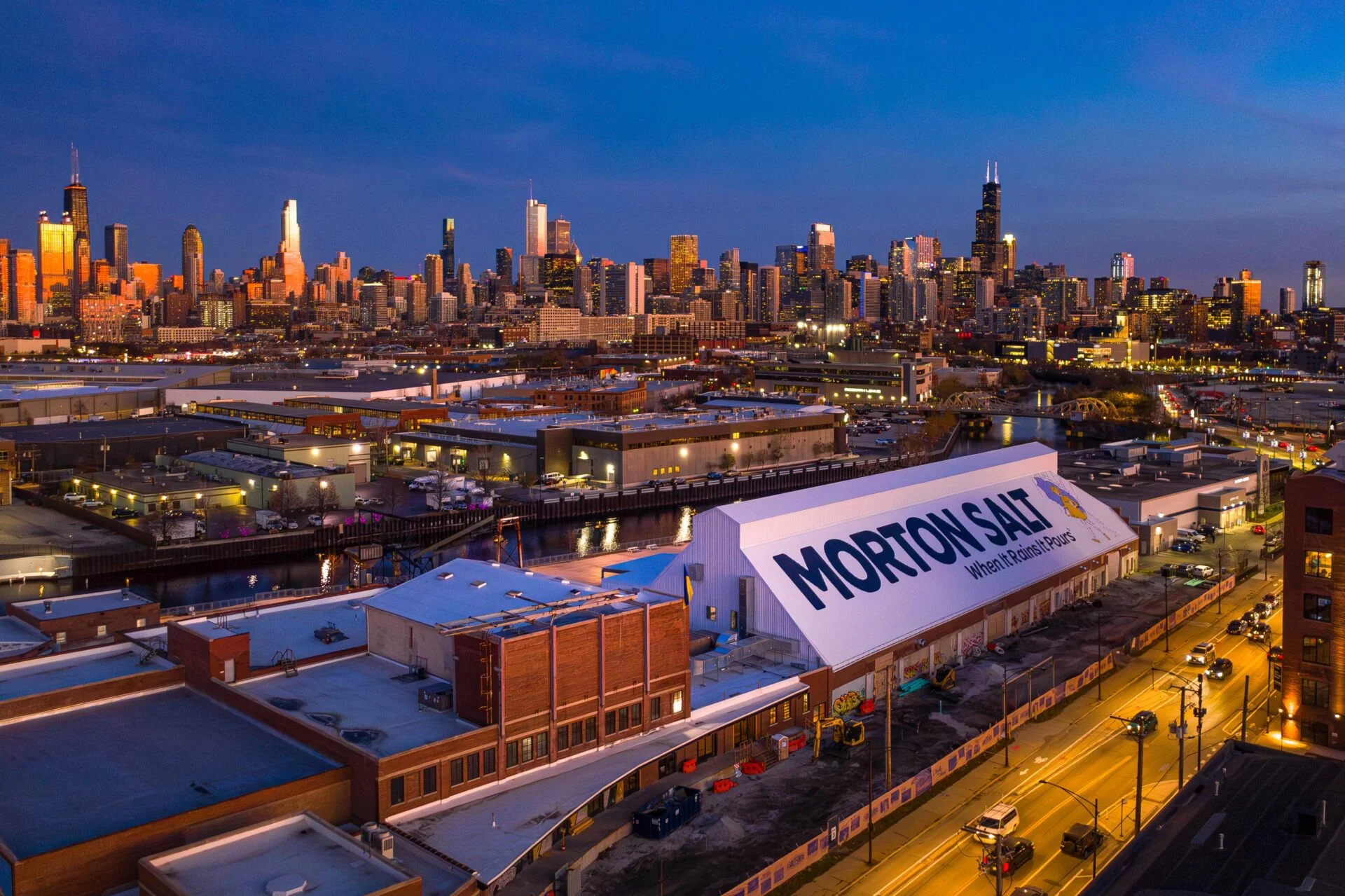
The transformation of Chicago’s Salt Shed illustrates this principle. Rather than erase the identity of the former Morton Salt warehouse, the project embraced its industrial history and reimagined it as a social and cultural destination. The architecture supports gathering, but the atmosphere gives people a reason to return.
Purpose also means integration. Technology, sustainability, and durability are not afterthoughts; they are foundational.
This is the assurance that interactive installations and media architecture become resilient parts of a place rather than temporary spectacles. Infrastructure should quietly support experience, allowing environments to evolve without losing relevance. A successful immersive environment performs over time, not just on opening day.
The adaptive reuse of Kunstsilo in Kristiansand, Norway demonstrates this approach. Former grain silos were transformed into galleries and public spaces, preserving material history while supporting entirely new forms of cultural engagement.
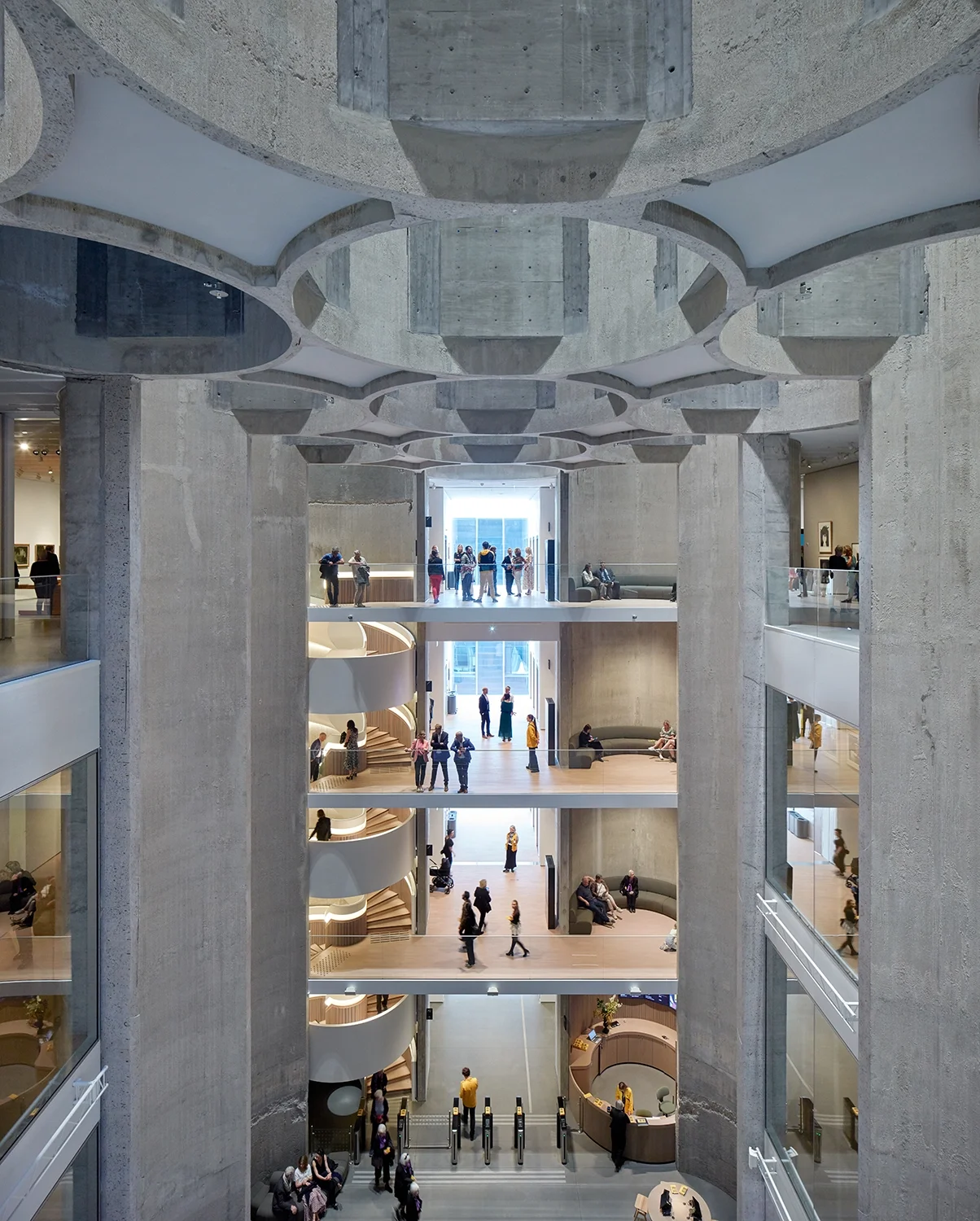
Beneath every memorable environment lies a spatial strategy. Circulation, acoustics, lighting, views, and systems create the conditions for experience to emerge.
Good experiential design is rarely accidental. The invisible structure matters just as much as the visible one. It is the data-informed approach to spatial planning that ensures a place performs as well as it looks.
Part 2: Artfully Realized
If design provides the bones, art provides the breath. To be “artfully realized” means moving beyond requirements and into the realm of emotional resonance.
We do not simply spec finishes; we consider how materials contribute to atmosphere and perception. Whether hand-patinated metal, wood, laminated glass, or generative digital media, materials become instruments of spatial storytelling. Their execution deserves the care and precision of a gallery piece.
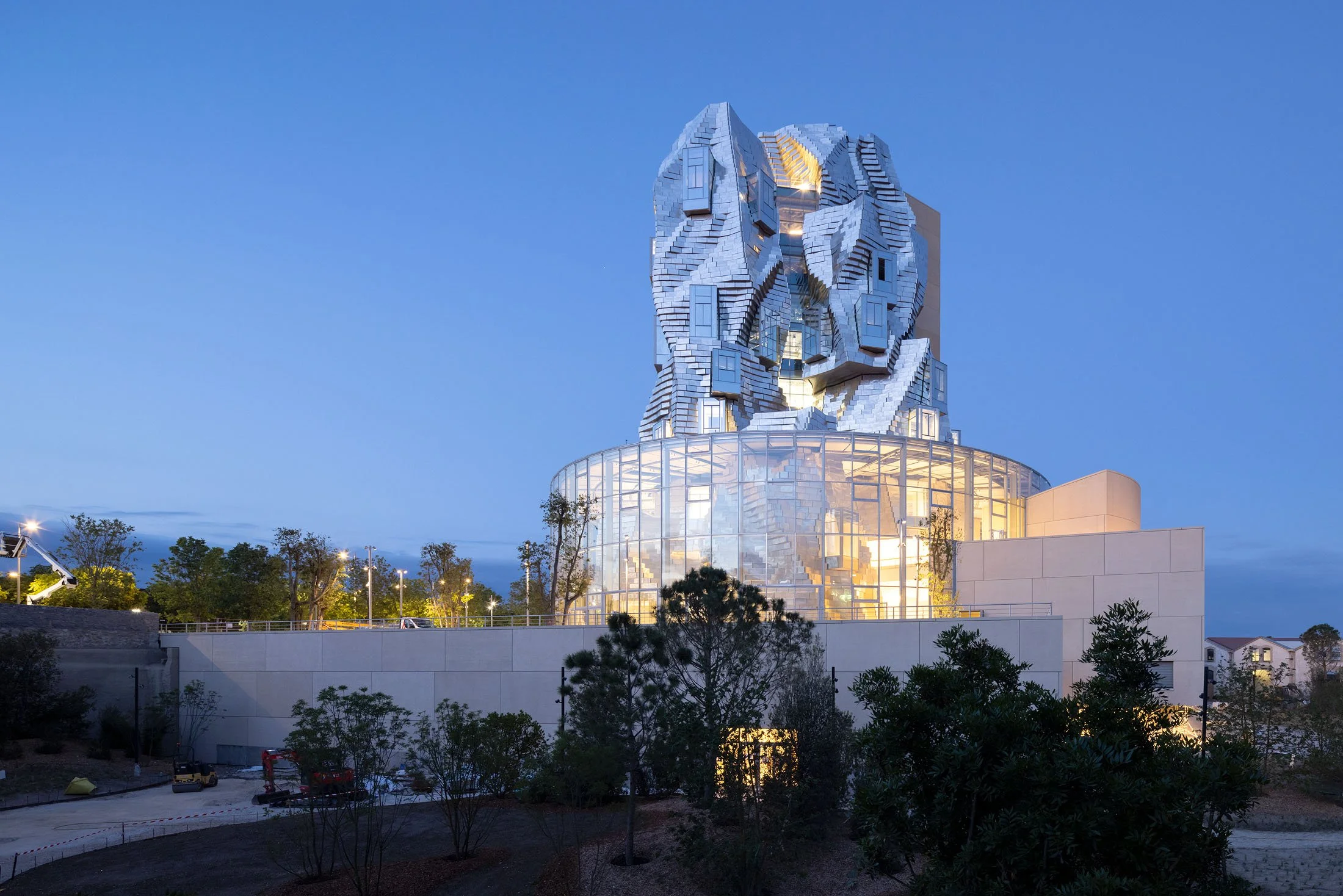
Frank Gehry’s Fondation Luma in Arles shows how material expression itself can become experiential. Set within the former Parc des Ateliers railway complex, the building is formed from a series of intersecting volumes clad in thousands of stainless-steel panels that reflect the shifting light and colors of Provence. Referencing both the region’s geology and the skies that inspired Van Gogh, the tower establishes a constantly evolving dialogue between object, landscape, and visitor. As one moves around it, the architecture appears alternately dense, fragmented, and luminous, turning material into atmosphere and perception into experience.
Art allows for moments that exceed expectation. Moments of wonder create memories and transform spectators into participants. Artful realization is also a nod to the makers, coders, fabricators, and craftspeople responsible for bringing ideas into the world.
It is the rejection of the generic in favor of the bespoke. It acknowledges that craft still matters, and that spaces possessing the hand of the maker evoke a kind of authenticity that mass production rarely achieves.
Purposefully Designed, Artfully Realized
By merging design, art, and craft, we create immersive spaces that do more than perform—they resonate. Through public art, workplace experience design, media architecture, placemaking strategies, and interactive environments, we seek to create places with gravity: spaces people return to because they offer more than utility.
When a space is both designed for a reason and realized with an artist’s eye, it acquires a quality that is difficult to quantify but impossible to ignore. No two projects arrive at the same answer, but over time we’ve observed that the most memorable environments share a common anatomy. Regardless of scale, budget, or program, spaces that resonate tend to exhibit the same underlying characteristics.
1. Agency: Not Just Objects, But Participants
Purposeful spaces are active participants. They respond to movement, light, sound, data, and time. They invite engagement, guide behavior, and subtly shape emotional experience. The environment itself has agency. Rather than serving as a passive backdrop, it contributes to the experience unfolding within it. Spaces that resonate do something—they adapt, reveal, frame, and encourage. They become collaborators in the life that takes place around them.
2. Alignment: Intention, Experience, and Outcome
There is a through-line from why a place exists to how it is experienced and what remains afterward. Whether the goal is connection, delight, reflection, orientation, or belonging, design decisions should be traceable back to that original intent. Purposeful spaces avoid novelty for novelty’s sake. Materials, technology, and form are employed in service of a larger idea. When intention and experience are aligned, meaning becomes legible and lasting.

Storm King Wavefield, 2009 by Maya Lin
3. Context: Rooted, Not Dropped In
Purpose emerges through response rather than imposition. The most compelling environments acknowledge site, history, climate, culture, and patterns of use. They engage with what is already present rather than treating context as a constraint to overcome. They belong to their surroundings and, in doing so, deepen the identity of the places they inhabit.
4. Restraint: Complexity That Earns Its Place
Technology, sculpture, and media should only be employed when they deepen meaning or expand access. Interactivity is not the goal; it is simply one tool among many. Purposeful spaces earn their complexity. Every layer, material, and system contributes something essential. Immersion is most powerful when it serves an idea rather than competing with it. Sometimes subtraction is just as important as addition.
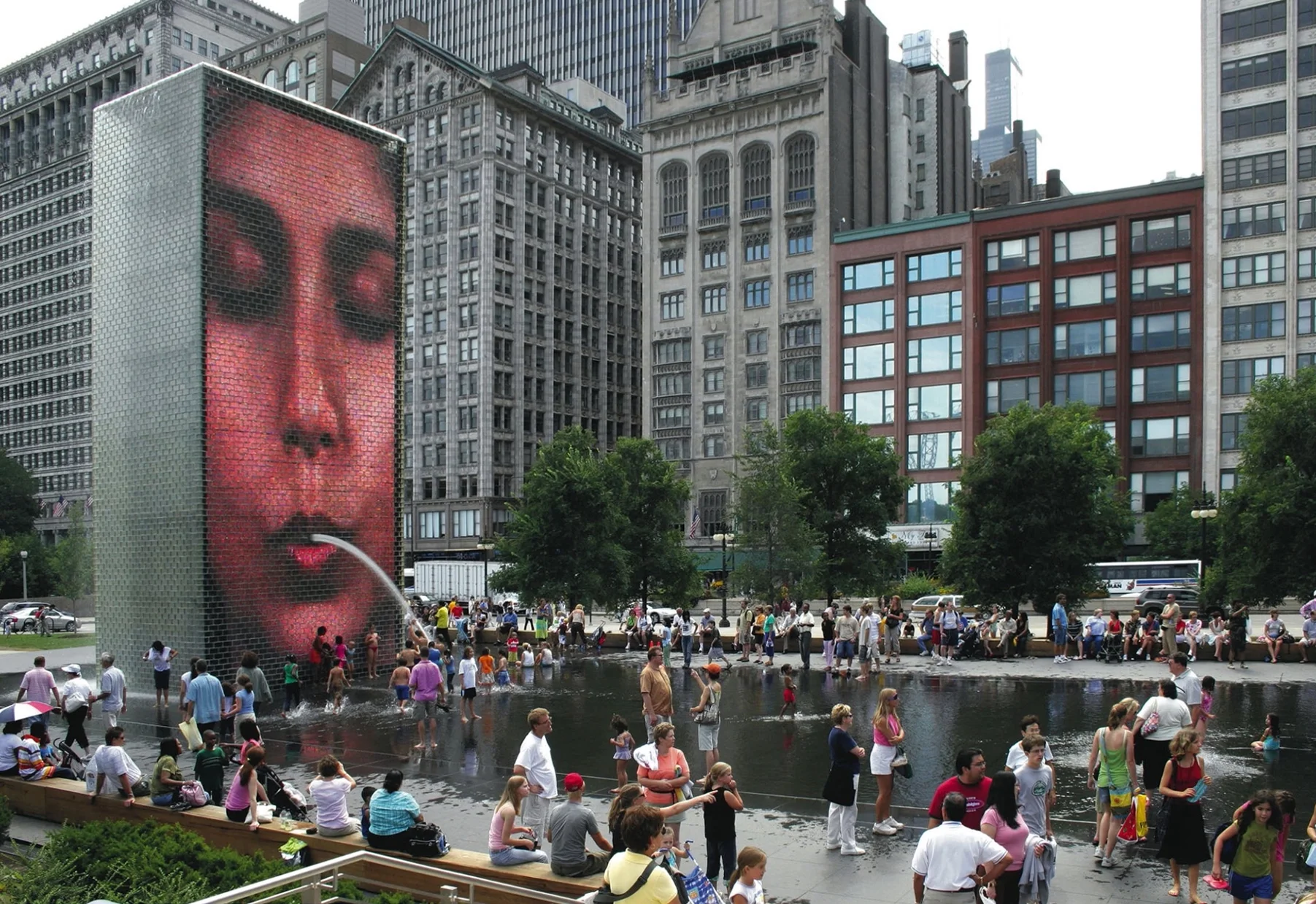
Crown Fountain, 2004 by Jaume Plensa in Millennium Park, Chicago
5. Participation: Redistributing Attention and Power
Purposeful spaces consider who the experience is for and who is often overlooked. They create multiple points of entry across age, ability, speed, and familiarity. They recognize that meaningful experiences should not be gated by expertise or privilege. Rather than prescribing a singular interpretation, they invite people to engage on their own terms. The most successful spaces welcome participation, allowing visitors to bring their own memories, perspectives, and meanings into the experience.
6. Residue: What Lingers Beyond the Moment
The best spaces leave a residue. A memory. A shift in perception. A shared story. A moment of pause in an otherwise transactional environment. The purpose of a space is not only what happens within it, but what carries forward afterward. Long after the lights turn off and the experience ends, something remains. A feeling. A conversation. A new understanding. The most meaningful environments stay with us because they become part of our own stories.
We create frameworks for experience and realize them through craft. We think deeply about flow, infrastructure, material, atmosphere, and memory because we believe the spaces people remember are cultivated.
The tension between design and art is not something to resolve. It is something to cultivate. Design asks what a space should do. Art asks what it should mean. One brings clarity, performance, and intention. The other brings emotion, wonder, and resonance. Together, they create environments that possess agency, align experience with purpose, respond to context, exercise restraint, invite participation, and leave a residue that extends beyond the moment itself.
No two projects arrive at the same answer, nor should they. Purpose is not a style, and artfulness is not an aesthetic. They are ways of seeing. Ways of making. Ways of asking better questions.
Ultimately, “Purposefully Designed, Artfully Realized” is less a tagline than a commitment. A belief that the places we inhabit shape how we feel. That infrastructure can be atmospheric. That technology can be human. That craft still matters.
The most meaningful environments are not defined by what they contain, but by what they make possible. When design and art move in concert, spaces become part of the memories, relationships, and daily rituals that give meaning to our lives.