
When Cities Begin to Behave Like Ecosystems
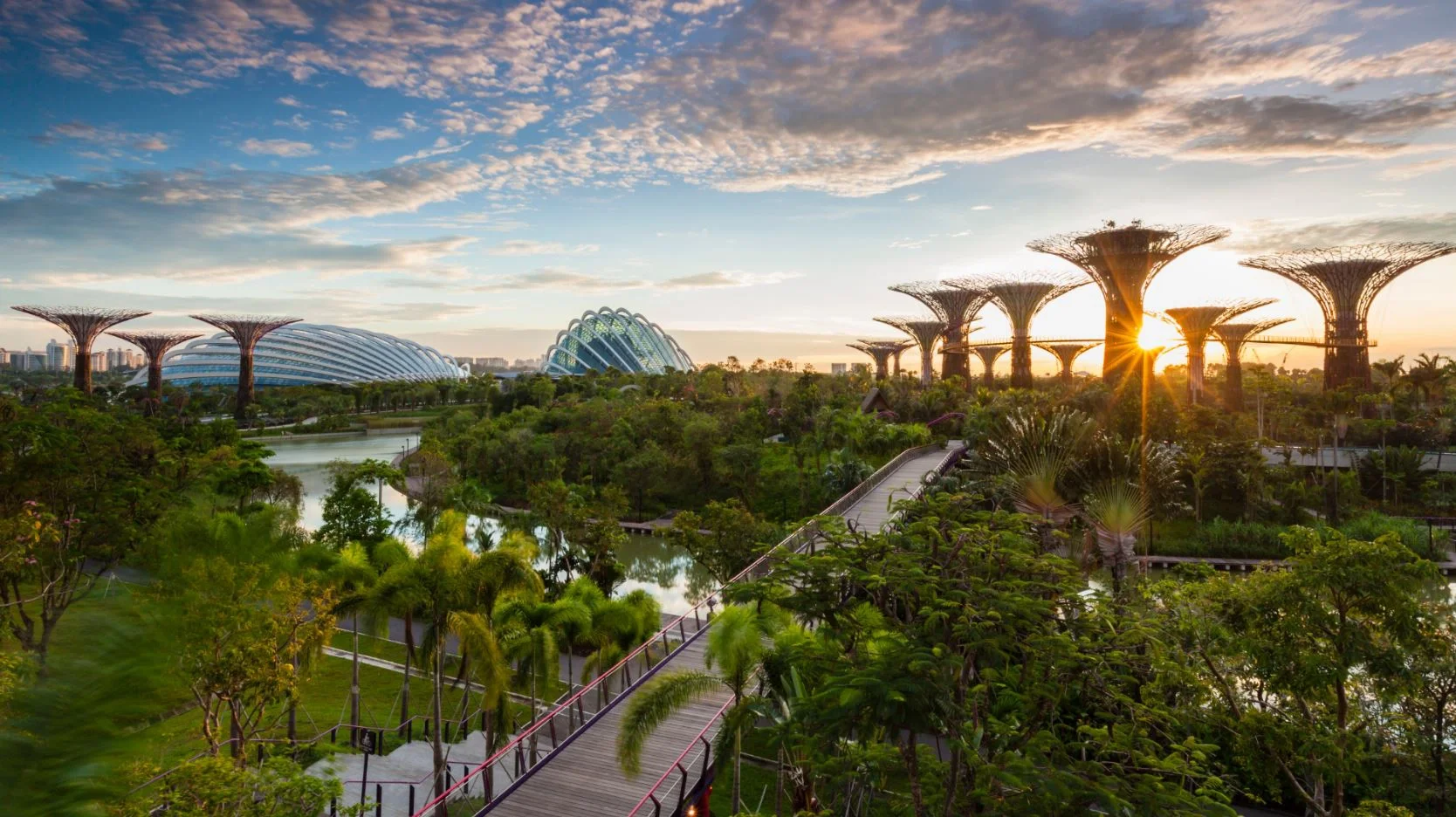
Gardens by the Bay in Singapore by Grant Associates
For most of modern history the built environment has behaved like a machine.
Resources are extracted. Materials are manufactured. Buildings are assembled. Waste is produced. The cycle repeats. Cities expand by consuming enormous quantities of energy and material, then exporting the environmental consequences somewhere else. The industrial city was never designed to behave like an ecosystem. It was designed to accelerate production.
But a different model of city is beginning to emerge. Architects, urbanists, ecologists, and designers are increasingly asking a radically different question: What if cities behaved like living systems?
What if buildings participated in ecological cycles rather than interrupting them? What if infrastructure restored biodiversity instead of displacing it? What if materials circulated through the city the same way nutrients circulate through forests?
This shift represents something larger than sustainability. It suggests a transition toward what some thinkers describe as a Post-Anthropocene city. A built environment that acknowledges humans are not separate from planetary systems but deeply embedded within them.
In this model the goal of design is no longer simply reducing harm. It is restoring balance. And that shift changes everything about how we think about space.
The Industrial City vs the Living City
The industrial city was built on a simple assumption: that natural resources were effectively unlimited. Coal powered factories. Timber became structural systems. Rivers transported waste away from dense urban centers. Land was cleared to make room for expanding infrastructure. The planet was treated as a vast supply chain feeding human development. For a long time that model worked.
Cities became engines of economic growth and technological innovation. Urban environments produced extraordinary concentrations of creativity and culture. But the environmental cost of this system has become increasingly clear. Climate change, biodiversity collapse, resource depletion, and pollution have all revealed the limits of industrial urbanism.
The challenge facing designers today is not simply making buildings more efficient. It is rethinking the relationship between cities and the ecosystems they inhabit. Instead of dominating natural systems, the next generation of urban design may need to collaborate with them. That collaboration begins by understanding cities as metabolic systems.
Urban Metabolism
Every city processes enormous flows of energy, water, materials, food, and waste. These flows behave very much like metabolism within a living organism. Resources enter the system, are transformed through various processes, and eventually exit as waste. Traditional infrastructure treats these flows as linear. Materials are extracted, used, and discarded. Energy is generated, consumed, and dissipated. Water is transported, used, and flushed away.
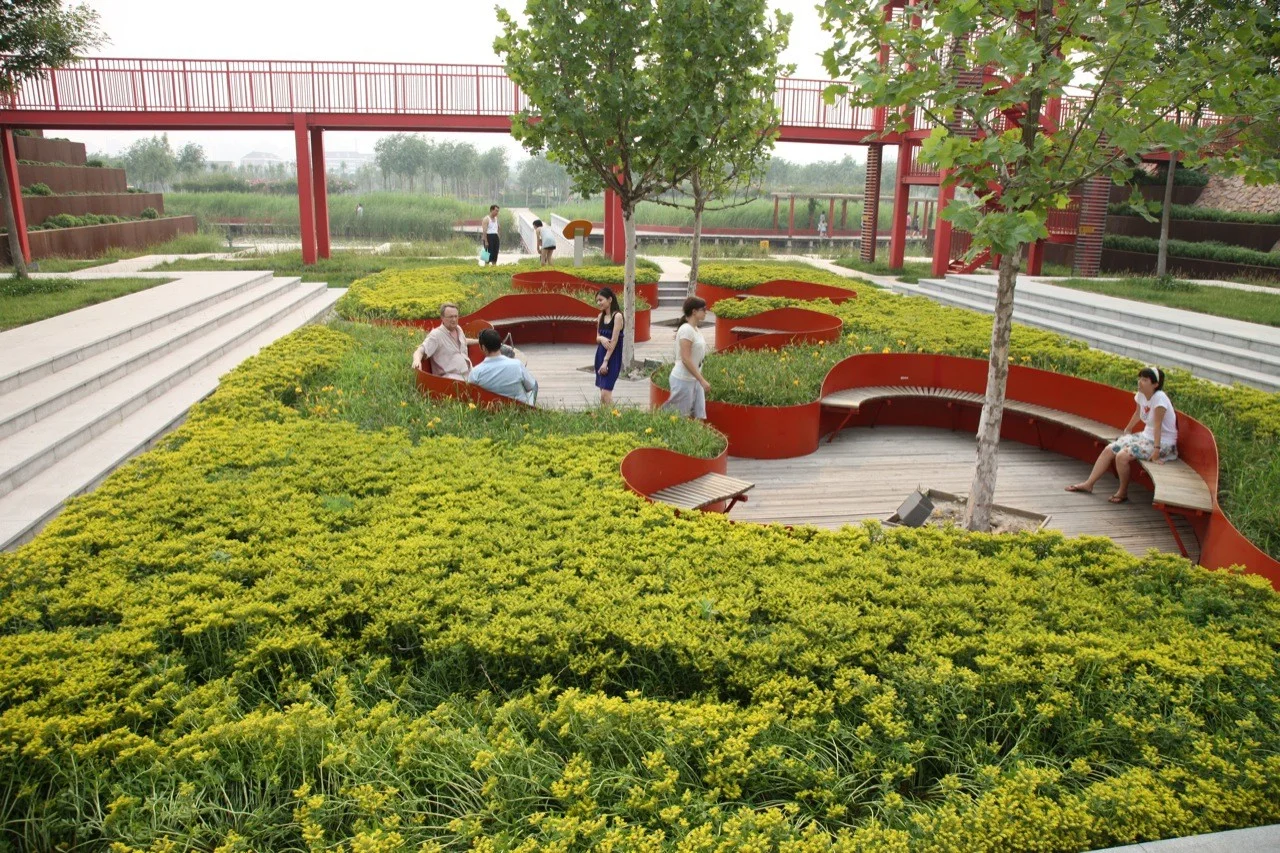
Houtan Park in Shanghai by Turenscape
In natural environments, waste from one organism becomes input for another. Nutrients circulate through complex networks of relationships. Nothing is permanently discarded because every byproduct becomes part of another cycle. Regenerative urban design attempts to apply this ecological logic to cities.
Organic waste becomes energy through anaerobic digestion. Industrial heat becomes district energy for surrounding buildings. Instead of suppressing natural systems, urban infrastructure begins to cooperate with them. This transforms how cities function and how they feel.
Circular Materials and the Memory of Cities
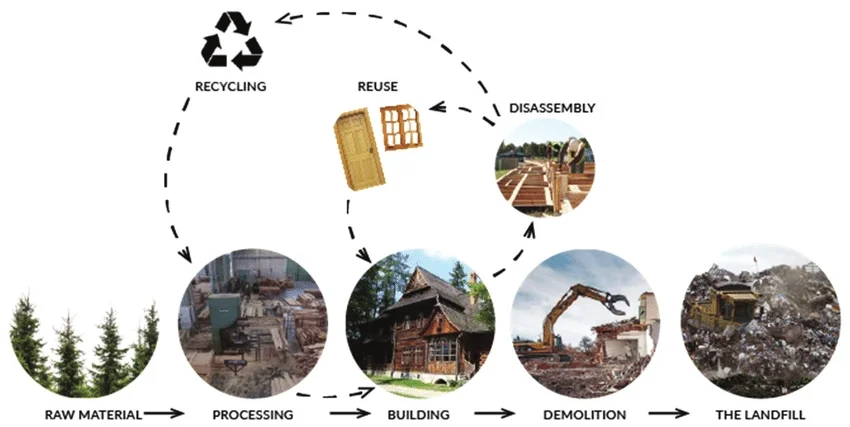
One of the most visible expressions of regenerative urbanism is the idea of circular materials. The modern construction industry largely treats buildings as disposable. Structures are demolished and their materials discarded in landfills. Concrete, steel, and glass are rarely designed with reuse in mind. Circular architecture challenges that model by treating every building as a temporary configuration of reusable materials.
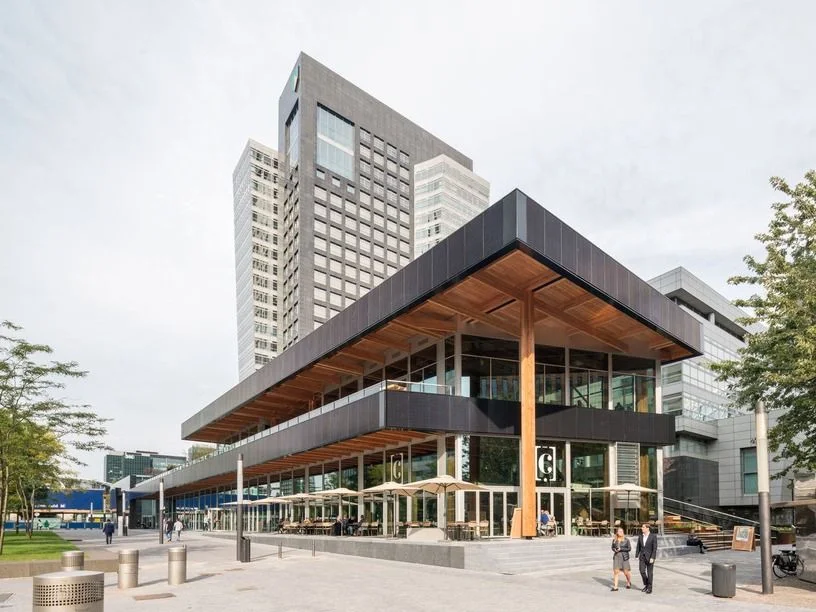
CIRCL in Amsterdam by de Architekten Cie.
Steel beams are manufactured for disassembly. Façade systems are designed for future reuse. Interior components can move between projects over decades. In a circular city, demolition becomes harvesting. Materials circulate through multiple lives across generations of architecture. The same steel beam might support a warehouse today, a cultural pavilion in twenty years, and a transit station decades later.
This introduces an entirely new aesthetic dimension to urban environments. Buildings begin carrying visible traces of previous lives. Materials accumulate subtle patinas and textures that tell stories about their journeys through the city. Architecture stops pretending that materials are new. Instead it celebrates their history. Cities become layered narratives of transformation.
Making Environmental Systems Visible
One of the reasons environmental systems feel abstract to most people is because they are largely invisible. Energy flows through wires hidden in walls. Water disappears underground into pipes and treatment facilities. Carbon emissions are recorded in distant reports rather than experienced in everyday space. Design has the ability to change that. Throughout architectural history, designers have often exposed systems that were previously hidden. Structural frameworks became aesthetic features of modern architecture. Mechanical systems were integrated into industrial interiors. Digital infrastructure is now visible in smart environments.
Environmental systems could become the next layer revealed through design. Imagine a public plaza where visitors watch water move slowly through layered landscapes. Or a building façade that subtly shifts light patterns based on real-time energy consumption. The building itself communicates its environmental performance to the people inside. Or an installation made entirely from reclaimed materials where each element carries a marker describing its previous life within the city. When environmental systems become visible, sustainability stops being an abstract concept; it becomes an experience. People begin to understand the relationship between their actions and the planetary systems that support them.
Immersive environments already operate through interconnected systems. Lighting interacts with spatial geometry. Sound shapes emotional atmosphere. Movement through space becomes part of narrative experience. The most compelling immersive spaces choreograph these elements to create powerful emotional responses. Regenerative urban design introduces another layer into that choreography. The city becomes a stage where ecological processes unfold in ways people can see and feel.
Designing Cities That Heal
Perhaps the most radical idea behind regenerative urbanism is that the built environment could eventually begin repairing ecological systems rather than degrading them. Urban wetlands could filter polluted water before it reaches rivers. Green infrastructure could restore biodiversity corridors across dense metropolitan regions. Buildings could incorporate materials that actively absorb pollutants from the atmosphere.
Some early examples of these ideas already exist.
Urban forests are being planted to reduce heat island effects and restore habitat. New materials are emerging that capture carbon during their production process. These innovations hint at a future where cities contribute positively to planetary health. The built environment becomes an ally rather than an adversary of natural systems.
The Cultural Shift Behind Regenerative Design
Technology alone will not produce regenerative cities. The deeper shift is cultural. Industrial urbanism emerged from a worldview that placed humans above nature. The environment was treated as a resource to extract and manipulate for human progress. Regenerative design requires a different perspective.
Humans remain incredibly capable creators, but we are also part of systems far larger than ourselves. Design can no longer operate as an act of control over the environment. It needs to become a form of collaboration with it, treating the natural world not as a backdrop but as a primary stakeholder. Architecture can draw lessons from forests, wetlands, and coral reefs, places where resources move through intricate cycles rather than linear chains of extraction and waste. Infrastructure can begin to mirror those patterns, and materials can circulate through cities the way nutrients circulate through ecosystems. The goal is not returning cities to wilderness. The goal is designing cities that behave as intelligently as nature does.
Designers occupy a unique position in this transformation. Policy can establish environmental goals. Engineers can develop new technologies. Scientists can study ecological systems. But design determines how those systems become part of everyday human experience. Whether infrastructure disappears underground or becomes visible in public space. Whether ecological systems feel abstract or emotionally meaningful. When regenerative systems are integrated thoughtfully into architecture and urban design, they do more than improve environmental performance. They reshape how people think about their relationship with the planet.
The built environment becomes a teacher revealing the invisible systems that sustain life and invites people to participate in their care.
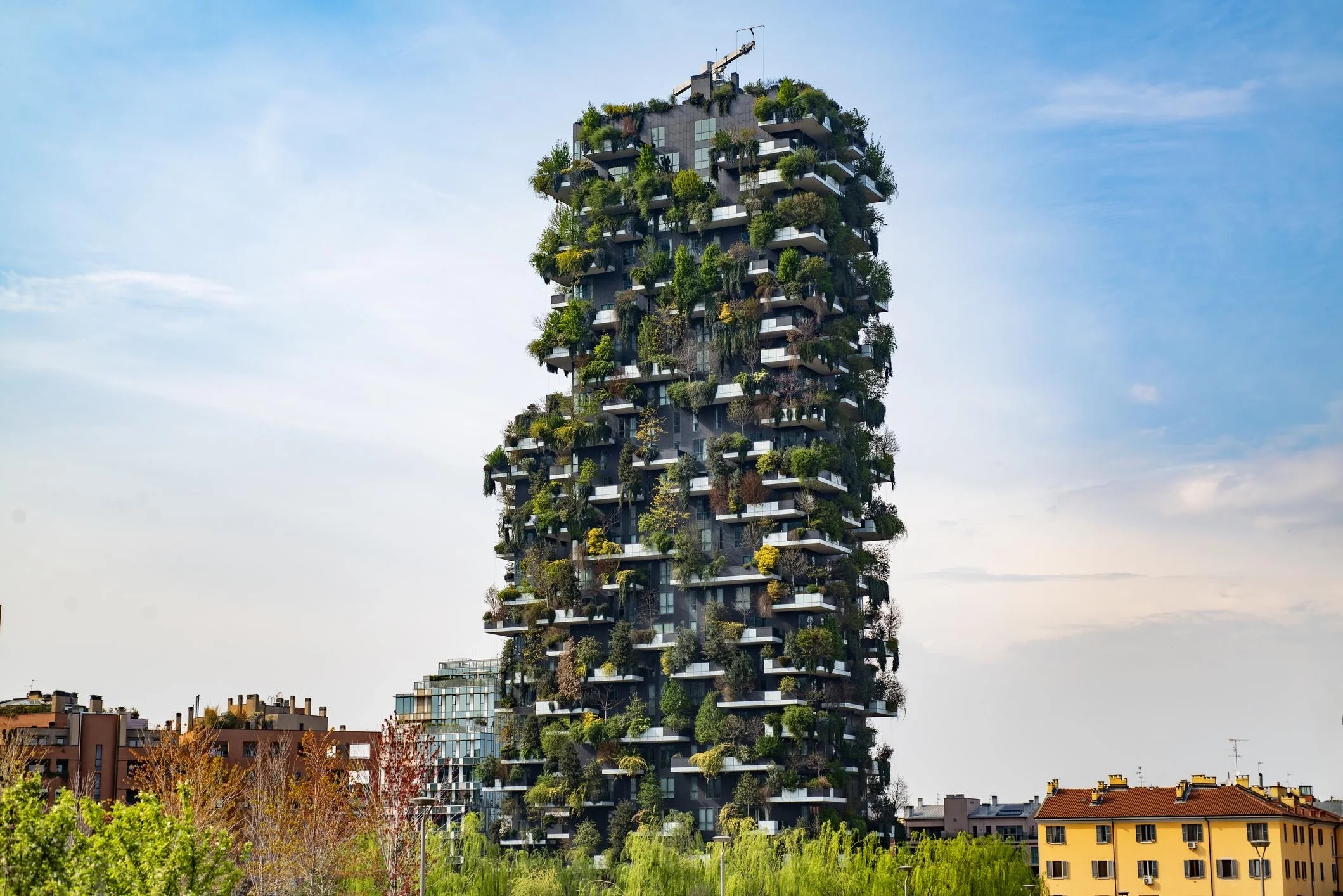
Bosco Verticale residential towers in Milan by Stefano Boeri Architetti
The Future City
The Post-Anthropocene city will not appear overnight. Most likely it will emerge gradually through thousands of design decisions made across decades. A circular material strategy here. A restored watershed there. A building designed for disassembly. A park that doubles as ecological infrastructure.
Piece by piece the logic of urban environments will begin to shift. Cities will still be dense centers of culture, innovation, and human activity. But they will also become partners with the landscapes they inhabit. Buildings will store and circulate materials. Infrastructure will restore ecological systems. Public spaces will reveal the environmental processes that support urban life.
The city will begin behaving less like a machine and more like an ecosystem.