
As we move through an era of hyper-integrated, multi-sensory environments, we believe craft isn’t just a finishing touch. It’s the connective tissue between a physical site and a person’s intuition. We’ve adapted the Five Dimensions of Craft to define how we build the next generation of responsive, human-centered spaces.
Craft is where the "why" meets the "how." It is the rigorous application of skill that transforms a conceptual blueprint into a physical reality you can touch, hear, and feel. Craft isn't just a final polish; it is our primary methodology. It ensures that the intelligence of our designs isn't lost in the execution, and that the beauty of our art is grounded in structural integrity.
1. Visual Geometry:
The architecture of first impressions
In digital design, visual craft is about pixels and grids. In the physical world, it’s about Visual Geometry. This is the hierarchy of a room, the rhythm of a facade, and the way light plays off a specific material.
We don’t just choose colors; we curate materiality. Whether it’s the grain of sustainably sourced timber or the refraction of a glass, visual craft is the silent language that tells a visitor, “You are exactly where you need to be,” while subtly alluding to how a space is meant to function. We believe in harnessing a materials inherent characteristics to create rich, layered environments that move beyond the surface-level "aesthetic" and into the realm of storytelling. By leaning into the authentic weight of stone, the warmth of wood, or the industrial honesty of raw steel, we design spaces that feel grounded and intentional.
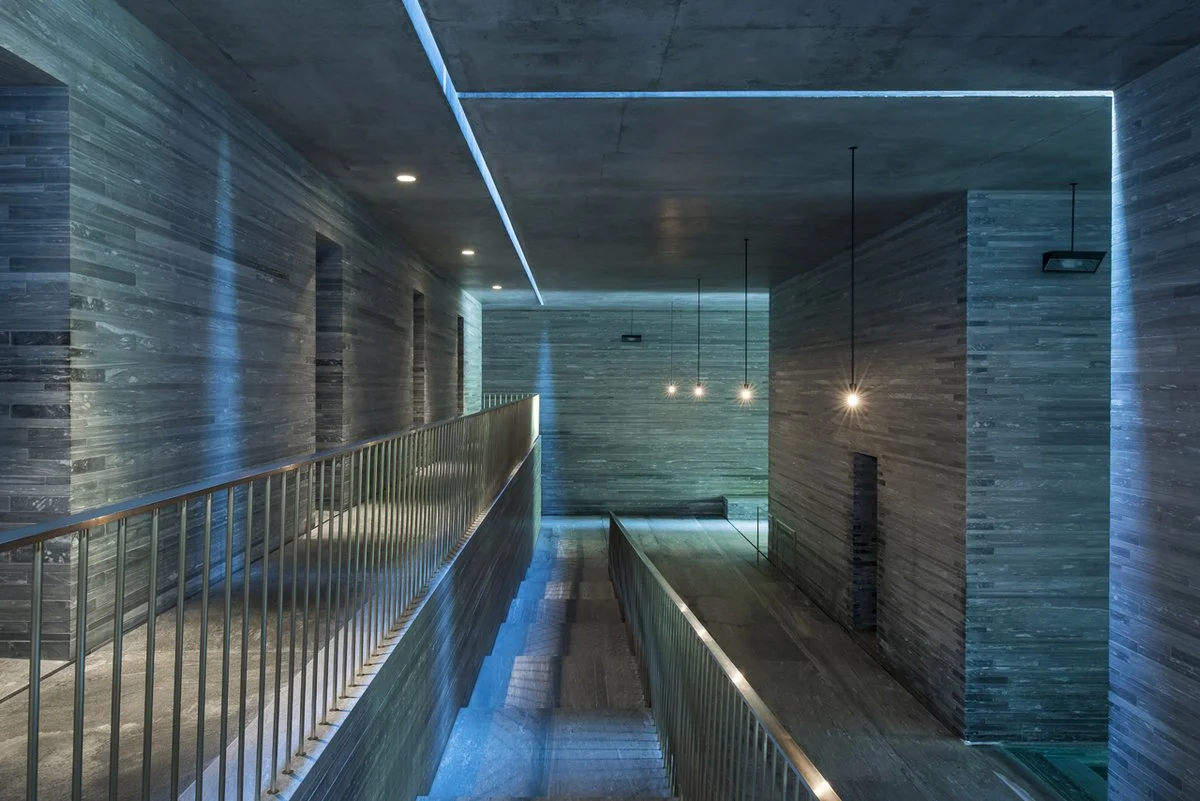
Therme Vals in Vals, Switzerland by Peter Zumthor. Stacked quartzite, compressed light, and deliberate spatial sequencing turns material into atmosphere.
This approach allows us to compose "high-touch" interiors where texture does the heavy lifting. We layer contrasting finishes—the soft matte of acoustic felt against the raw edge of board-formed concrete—to build a sensory depth that invites the eye to linger and the hand to follow. This layering transforms a sterile room into a destination people actually want to be in. When we honor the grain, the patina, and the natural irregularities of a medium, we aren't just decorating; we are building an engaging, tactile narrative that makes a space feel fundamentally "right."
2. Spatial Motion:
Animating the experience
How does a room breathe? How does a digital projection react to a person walking past it?
Spatial Motion transforms static environments into living entities. We utilize "attract loops"—subtle, rhythmic pulses of light, sound, or kinetic movement—to draw people toward specific focal points, acting as a non-verbal invitation to engage with a space. This isn't just about spectacle; it is a sophisticated form of wayfinding. By leveraging motion to guide the eye and the body, we can intuitively direct flow through an environment without the need for intrusive signage, allowing the architecture itself to suggest the path forward.
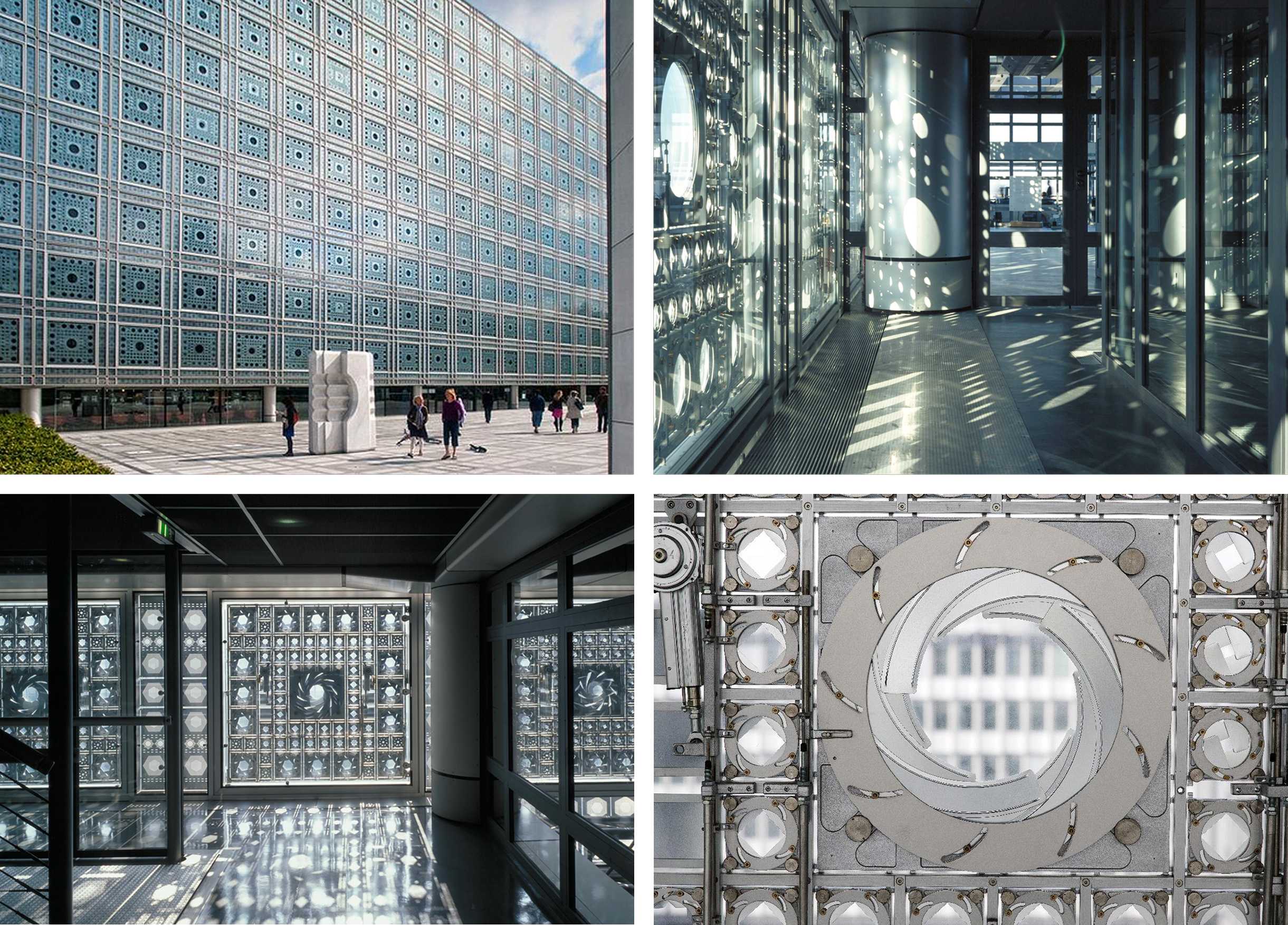
Institut du Monde Arabe in Paris, France by Jean Nouvel. Kinetic apertures continuously adjust in response to changing daylight conditions creating a dialogue between occupant, atmosphere, and time.
This animation extends beyond digital projections and sensors into the fundamental mastery of time and natural elements. We leverage the shifting play of sunlight as it tracks across a room or the soft diffusion of shadows when clouds pass overhead to ground a space in the present moment. This temporal dimension of craft calls attention to the passage of time, creating a "feeling" that shifts user sentiment from passive observation to active presence. By syncing digital layers with these natural rhythms, we create a feedback loop where a hallway is no longer a transition zone, but a continuous dialogue between the occupant and the shifting spirit of the building.
3. Narrative Voice:
If these walls could talk
Every brand or community has a "tone of voice." In immersive design, that voice is the Narrative. It’s the "why" behind the "what."
When we design a workplace activation or a public art piece, we ask: What story are these materials telling? Is it a story of industrial heritage, or a future-leaning vision of connectivity? We craft environments that act as physical brand ambassadors, using spatial storytelling to foster a deep sense of belonging and culture.
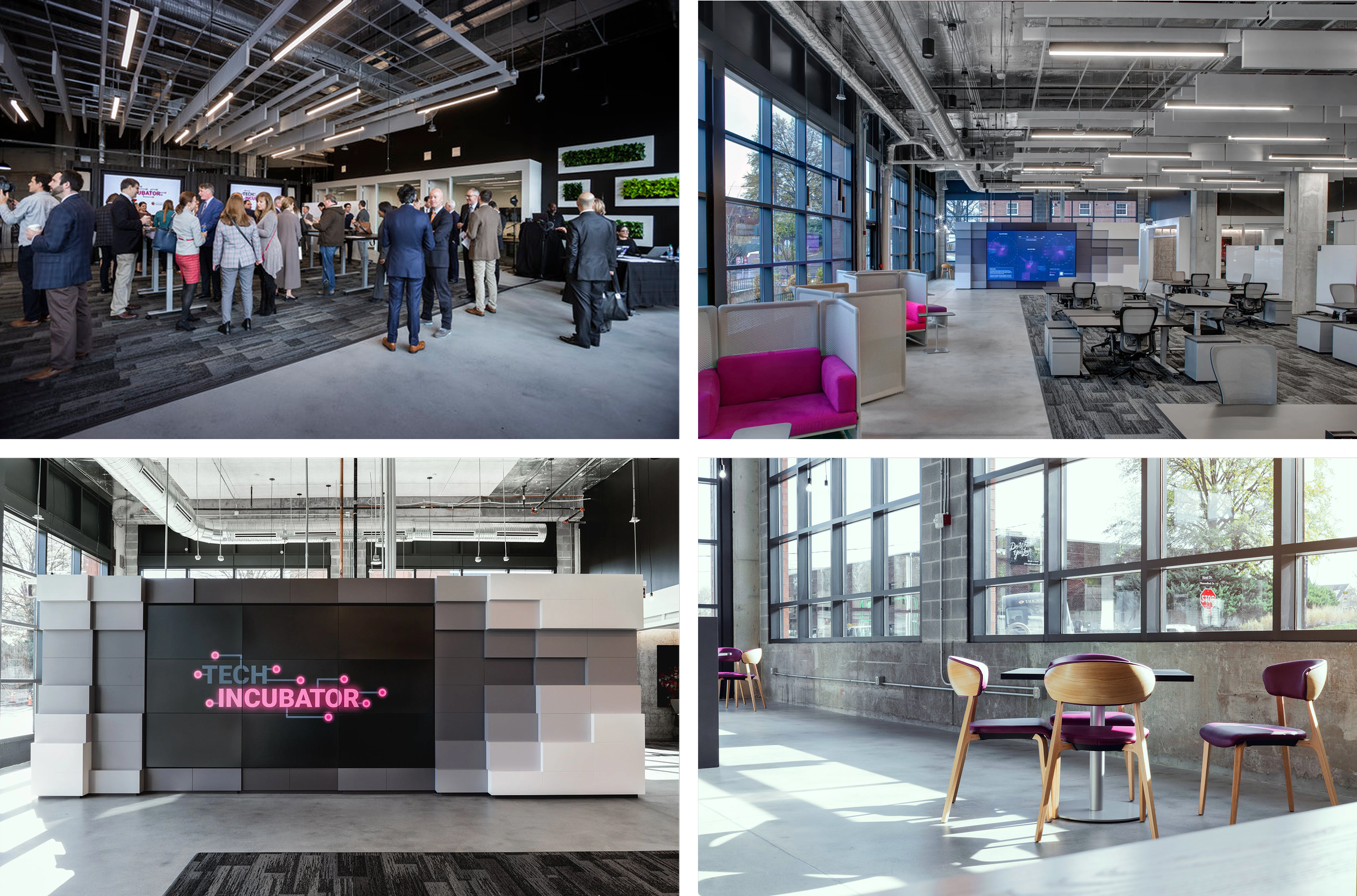
Tech Incubator at University of Maryland by Immersive Material Office. Muted grayscale tones frame student activity, while vivid magenta accents reference the artificial logic of AI and machine learning.
For example, our University of Maryland Tech Incubator project positions the workplace as a “stage” …a space within a space, foregrounding collaboration as the central experience rather than the backdrop to it. The narrative voice of the project is rooted in celebration, ownership, and visibility — creating an environment that elevates the people and ideas shaping the incubator. Through a flexible collaborative hub and a physical-digital feature wall inspired by voxels, the space acts as a platform for students and associates to actively craft and shape their environment. The result is a spatial narrative that shifts the perception of the incubator from a traditional corporate workplace to a tech-forward culture centered on experimentation, participation, and collective innovation.
4. Material Ergonomics:
The tactile connection
Craft in this dimension is about the true “feeling” of a space. Material Ergonomics expands traditional approaches beyond posture, clearance, and usability into the emotional and sensory relationship between people and space. It asks not only can this be used comfortably? but how does this feel in the body? Our approach to materiality becomes an interface — shaping perception through tactility, temperature, resistance, softness, acoustics, and responsiveness. A brushed metal handrail that cools the skin, a textured wall that absorbs sound and invites touch, or a responsive digital surface that reacts through light and haptics; these tactile details are what make a space "lovable" rather than just "functional." By blending physical craft with digital integration (AR, spatial audio, and haptics), we dissolve the social barriers that traditional architecture often creates. These sensory cues reduce the psychological distance often created by institutional or corporate architecture, replacing passive occupation with active engagement.
The principle becomes especially relevant in hybrid physical-digital environments where technology can often feel sterile or disembodied. By integrating haptic feedback, spatial audio, responsive lighting, AR overlays, and crafted physical materials, the environment begins to behave less like static architecture and more like a living interface — spaces that communicate intuitively through the body before cognition catches up.
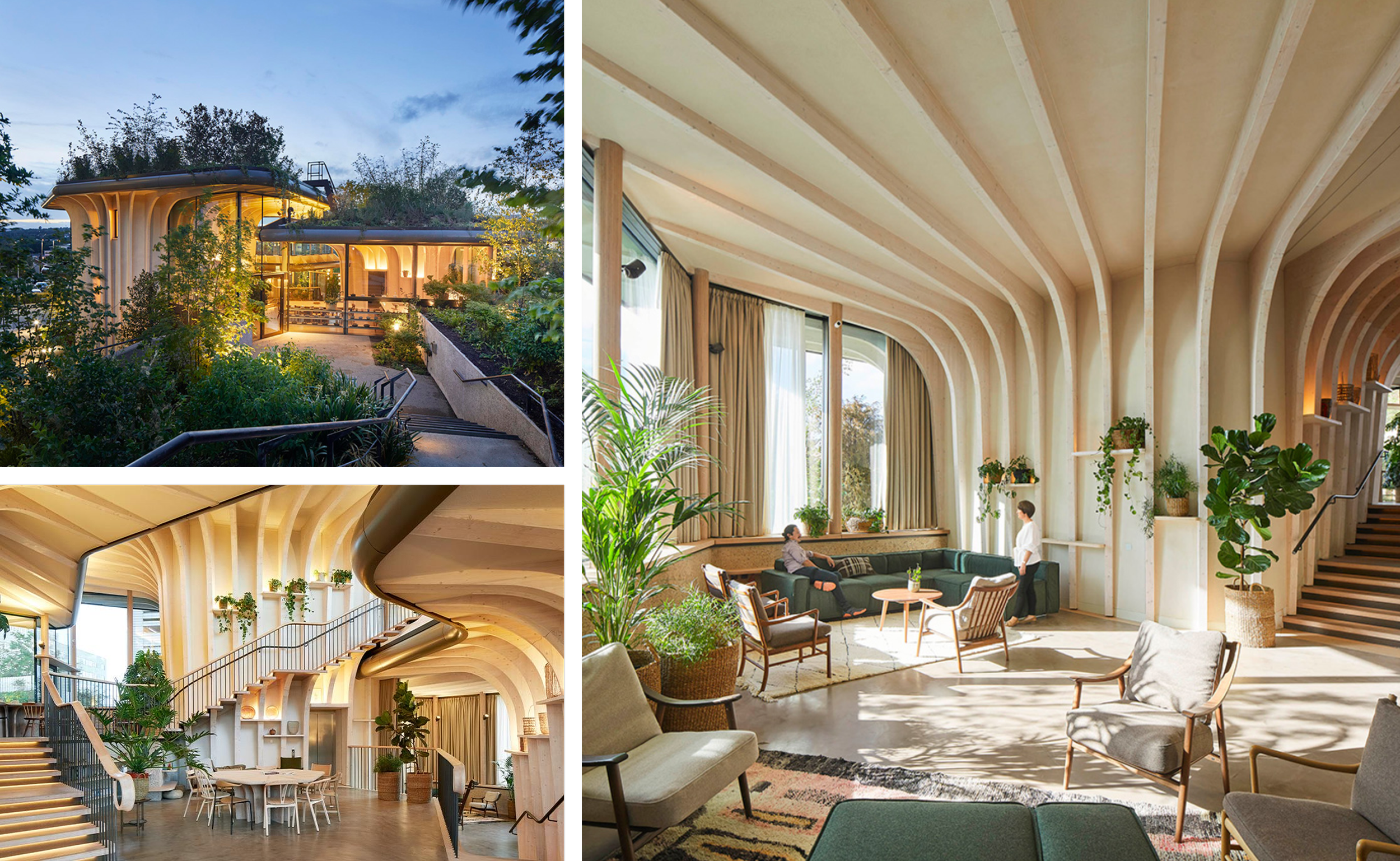
Maggie's Leeds Centre, a cancer support facility located in Leeds, England by Heatherwick Studio. tactile materials, soft spatial transitions, and domestic-scale detailing can reduce institutional anxiety.
5. Interactivity:
The responsiveness of the system
The final dimension is Interactivity—how the system responds to input. In a world of "smart" buildings, true craft lies in the elegance of that response.
Interactivity isn't about adding tech for tech’s sake. It’s about creating Responsive Experiences. If a visitor gestures, does the lighting shift subtly to acknowledge them? If a community gathers, does the soundscape evolve to reflect their energy? This is where physical craft meets digital intelligence to create a truly immersive ecosystem. The environment should feel aware without becoming performative; adaptive without becoming distracting. The best responsive systems operate with restraint, anticipating needs and shaping atmosphere in ways that feel intuitive rather than automated.
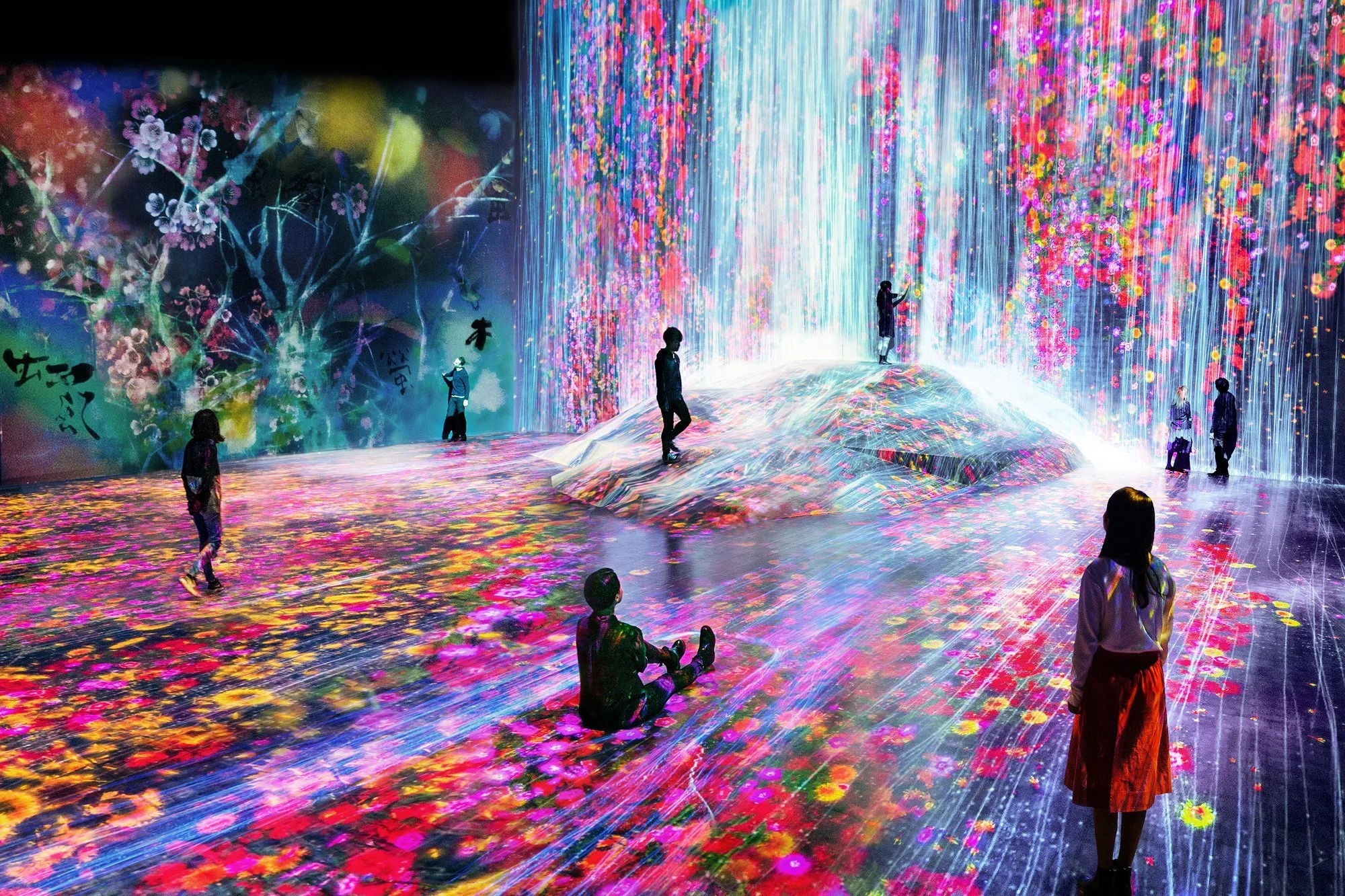
Universe of Water Particles on a Rock Where People Gather, 2018 by teamLab. Using real-time behavioral input to continuously reshape the projected environment in relation to it’s audience.
This requires thinking of architecture not as a static object, but as a living interface. A space that responds with subtlety can foster curiosity, calm, connection, or collective energy. These moments of reciprocity make environments feel less mechanical and more human. The result is not simply a “smart” space, but a space with presence—one that continuously adapts to behavior, context, and atmosphere while remaining grounded in the core principles of craft.
Why Craft Matters for Your Space
In a fast-paced market, craft is the differentiator. It’s the reason people stay longer in a retail environment, feel more inspired in a workplace, and connect more deeply in a public park.
Ready to bring your space to life?
Explore our Capabilities | Book a Strategy Session with IMO